History of Surprise Lake Camp
Jack Holman
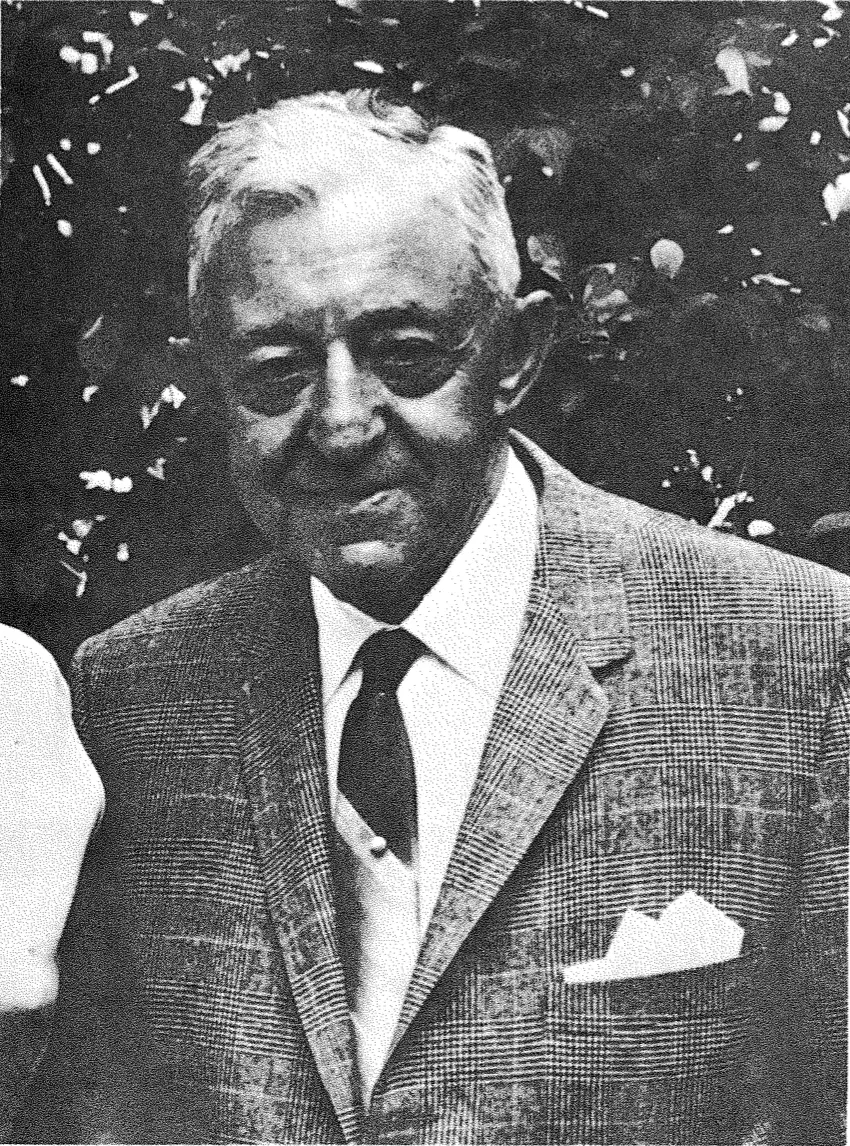
Mr. Surprise Lake Camp
JACK HOLMAN
History of Surprise Lake Camp
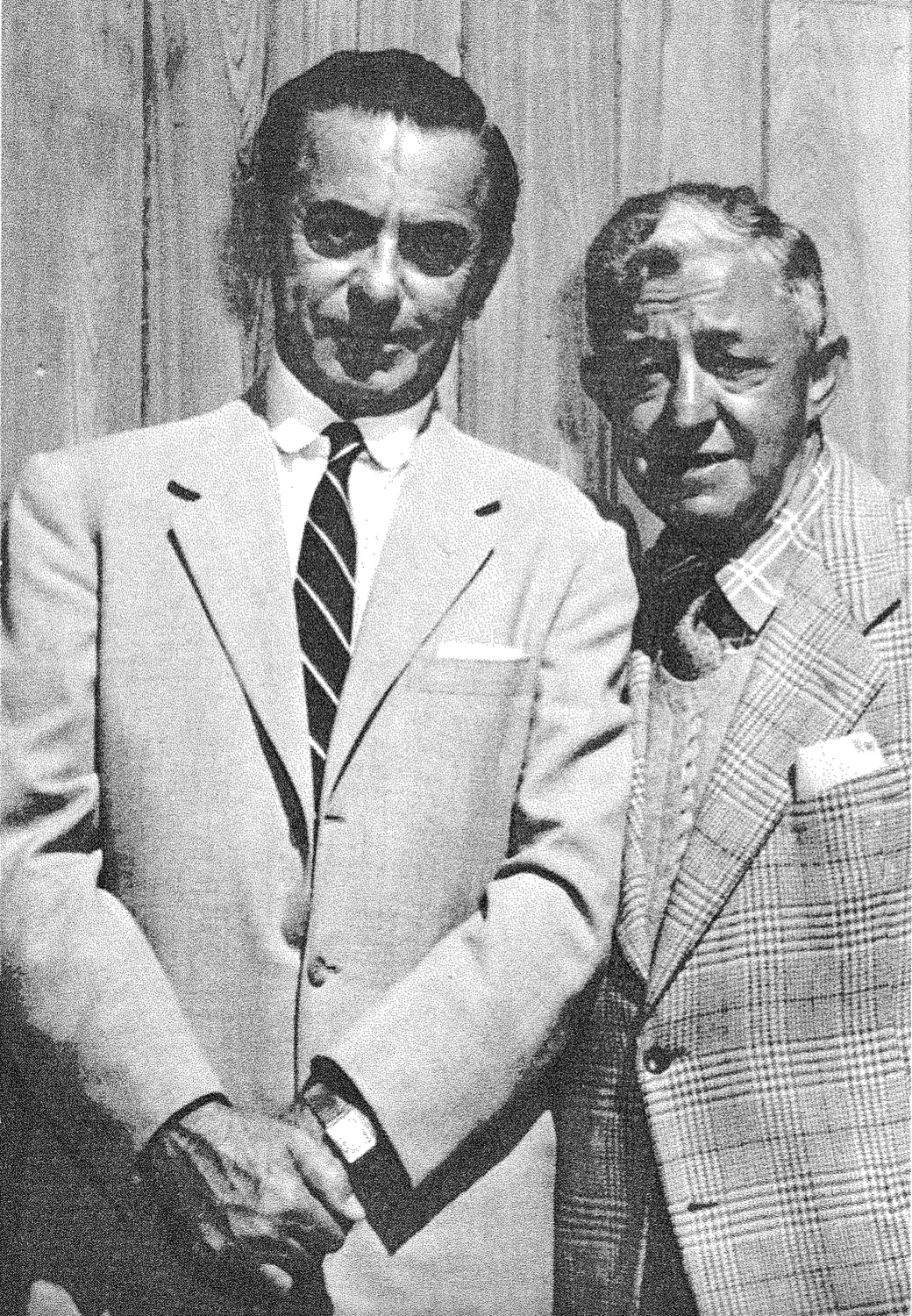
Eddie Cantor and Jack Holman
HISTORY of SURPRISE LAKE CAMP
JACK HOLMAN
Surprise Lake Camp
COPYRIGHT 1972
by Surprise Lake Camp
New York, N.Y.
PRODUCED IN U.S. OF AMERICA
Dedicated to My Wife, Children, and Grandchildren
CONTENTS
Foreword
ALTHOUGH VOLUNTARISM and the social institutions which it creates and maintains have long been distinguishing features of our society, it is rare indeed to see the development of any service organization through the eyes of a single individual. Voluntary activity being what it is, people rarely stay with an interest for more than decade or two. Typically, they find new services rendered by the agency less appealing than the activities that originally attracted them to the work; or they find that newly defined needs and the program required to meet them entail an ever increasing budget and create fundraising obligations beyond those they wish to assume.
Surprise Lake Camp emerges in this history as the exception that proves the rule. Jack Holman is able to give us this personal interpretation of the institution because he is truly Mr. Surprise Lake Camp. His interest in the organization and his efforts on its behalf span a period of seventy years. In that period he and his associates have been able to attract to the camp community support and the interest and concern of many other individuals whose sustained and enthusiastic efforts on behalf of the camp have been second only to their own.
There are many reasons for this extraordinary record. One of them assuredly is the quantity and quality of community support which the camp has enjoyed. In its earliest years, as the following pages relate, the camp profited from the understanding efforts of young teachers and club workers who knew the Lower East Side well. Indeed, many of them were separated by less than a dozen years from the boys they served. Many of these same young men-my father I. Edwin Goldwasser among them--developed an enthusiasm for the sort of enterprise the camp represented and labored to secure community-wide support for such programs. Their efforts resulted in the establishment, in 1917, of the Federation of Jewish Philanthropies of New York, destined to develop into one of the most successful communal efforts for social welfare ever created. Surprise Lake Camp was one of the first agencies accepted into the new Federation-a privilege accorded very few, since in those early days it was essential that every service supported be both necessary and well-administered.
Surprise Lake Camp was already a well-established agency. Several of its founders and early supporters were active in the new Federation-and one can imagine that such men as Felix M. Warburg as well as I. Edwin Goldwasser and Jack Holman were powerful spokesmen. The camp was welcomed into the Federation family and, as a result, its survival was assured so long as the service it rendered filled a community need. Grants have varied in size according to the camp's needs and to the economic climate of the country as it affected communal support of the Federation. But in every year, beginning with a grant of $14,123 in 1917, falling to a low of $4,169 in the black depression year of 1933, and rising to the present high of $75,396 for the year 1971-72, there has been a maintenance grant that kept the camp going. Over the years these grants have totalled $1,706,726-and Federation has also allocated $164,069 in building funds to Surprise Lake Camp.
It is to the credit of all the directors of the camp over the years that they have watched closely to see that their camp moved with the times and always served the actual needs of the community. This alertness is evidenced throughout Jack's history, especially by the many services that were started, continued for a number of years, and then restudied-some to be abandoned, some to be resumed in a new form, and some to be replaced by programs more relevant to the changing needs of the community.
Similarly, successive camp boards have never regarded Federation's allocations, generous as they were, as the limit of their resources. Three times, as Jack's narrative tells us, the camp was completely rebuilt with funds raised or contributed by board members, alumni, and other friends of the camp. Annually, scholarship funds from the Women's League and other supporters make it possible for Surprise Lake Camp to accept all applicants, charging each family only what it can afford to pay and drawing upon its friends to make up the difference. Maintenance of camp buildings, thanks to these generous donors, not only keeps them in use longer than might be expected but sometimes includes drastic renovations which change their function and thus adds considerably to their useful lives.
Surprise Lake Camp has thus enjoyed the best of two worlds. It has had sustained community support through Federation but has also retained the special interest of individuals, like Jack, to whom it is and will always remain their camp. Over the years, Surprise Lake has offered thousands of children a unique growing experience-and many of these children have never forgotten the opportunity given them. Former campers have been the mainstay of the camp board. Their appreciation has spurred them to send contributions to the camp scholarship fund -in gratitude for what they received from camp and as an attempt to extend the privilege to new generations. Their children have returned both as campers and counselors. Alumni associations too stand always ready to help the camp to grow and to serve. Few social agencies have as many grateful former clients, and clients now in a position to help with time and with funds. And of course only one-Surprise Lake Camp-has Jack Holman to remind these former beneficiaries of what they can do for the camp. Indeed, Jack is our secret weapon, and one of the prime reasons for Surprise Lake Camp's extraordinary history. He has not only written it in the following pages; he has made it, shaped it, set its tone.
Of Jack's many contributions to the camp, the greatest has been himself-his dedication, his energies, and above all his openmindedness and his acceptance of change. In his story of the camp he skips lightly over the development of the camp from fresh air vacationland to nourishing food for the sickly, to body building and athletic prowess, to team sports, and to its present program of positive Jewish orientation plus an experience in living with one's peers. Anyone who has worked in any social agency knows that such growth is not easily achieved. Indeed, it is often impossible. It has happened at Surprise Lake because we have Jack-Mr. Surprise Lake Camp-always openminded, always ready to test out a new idea, always, even at 87, the youngest in spirit of all of us. May he stay to guide us for many years ahead.
MARJORIE WYLER
Chairman
Board of Directors
Surprise Lake Camp
June 1972
Birth of an Idea
ARTHUR SCHLESINGER, Jr., a professor of history at Harvard University, and more recently at City University of New York, says "History is a precious legacy which a rational people will wish to protect for its own sake and for a better understanding of what it is all about.' That may be a possible excuse for a history of Surprise Lake Camp. But, why now?
To reach the age of seventy, three score years and ten, in past years was considered unusual. In recent years, four score and more years of life is becoming almost a commonplace.
Now, Surprise Lake Camp has reached the seventy-year-stage and bids fair to continue for another seventy years or more. The fact that Surprise Lake Camp is now seventy requires an historical review. That is why the story of its origin and its performance to date is now being recorded. Incidentally, the history of Surprise Lake Camp which now follows is based a good deal on oral testimony rather than on research of documents and manuscripts. In a large measure the oral testimony emanates from the writer whose privilege it has been to be affiliated with the camp for almost seventy years in a number of varied capacities-first as a counselor in the beginning years, as an active director of social activities once the camp was established, then, in chronological order, as a member of the Board since 1921, Chairman of the Board for fifteen years, and now Honorary Chairman of the Board for the past ten years.
In view of the author's long attachment to the camp, his personality has become part of the camp and the recital of its history has a blend of personal items which are woven into the story as a matter of the growth and development of the camp. The longevity allotted to the writer enables him to give the seventy year history of personal touch while informally reviewing the progress of the camp a the camp from 1902 until the present time, 1972.
It would be a mistake from a sense of false modesty to pass by an opportunity to put this story on record. Very often a biographer a weaves a history of a temporal period around the person of his tale. Here, in this story, the person is bounded by a history of himself. Comments from people familiar with this undertaking have expressed themselves in terms that the name of this author and Surprise Lake Camp are synonymous. This assertion is based on a lifetime of affiliation between the two extending over a period of about seventy years, from the origin of the camp in 1902 until the present time in 1972. In view of this fact the first author may periodically write in the person to bring home the impact of that relationship. In that way the origin of the Eddie Cantor Camp Committee and a fair share of the progress of Surprise Lake Camp can be more readily presented. This situation more actually started while I was in the public school system of New York City.
At one time, while teaching the graduating class of the school, it occurred to me to improvise meetings with parents, not as a parent association of the school but as a separate class entity. With the consent of the principal of the school I was permitted to set aside one school day afternoon of a school term to invite the parents of the pupils of my class to visit the classroom to observe their boys in the lessons of the day. Not all of the parents were able to give the time. Those who attended were told that one of the purposes of those gatherings was to consult with them on the selection of high school for their boys after graduation from the elementary school. To make this consultation effective it was arranged that I would visit the homes of my pupils to talk this matter over with the parents. Appointment dates were set and, over a period of two years in which I was the teacher of four graduating classes, I visited two hundred homes. In those days the class roster consisted of fifty pupils each school term, two terms to a year. The school was in the heart of the Lower East Side and the pupils attending were exclusively from that area. Practically all of the parents were foreign born, recent immigrants to this country from Russia and Austria. Most of them struggled to make a living for the family and resided in overcrowded tenements of the neighborhood.
Appointments for the visits were made, subject to the convenience of the parents, for evenings and weekends. None of the homes visited had elevators, which in many instances meant walking up five to six flights of stairs to get to the residence of the families. The apartments they lived in usually consisted of two or three rooms in which were crowded the parents, their two or three children, and in many instances several boarders who helped to pay the upkeep of the families. Household furniture was makeshift, consisting of a table and a couple of chairs, a bed or two. In only one house in the number I visited -that of a family who owned a clothing store on Canal Street -was there a semblance of a furnished home. Most other families were obliged to live economically and furniture was not a
prerequisite.
In my visits to the homes of my pupils the parents were happy to have a so-called government agent come to their homes for a wholesome purpose. In their former homes in Europe the only time a government person came to their homes was to create trouble. Into this milieu I came to talk to them about their most precious possession, their child. In each situation I apprised the parents about their boys' school progress and then led to the recommendation of one of Manhattan's four high schools then in existence. For the particularly bright boys Townsend Harris Hall was recommended-the DeWitt Clinton High School for ordinary students, and the High School of Commerce for boys who would do well in business, and the Stuyvesant High School for those boys who manifested an interest in sciences. None of the parents were aware of the significance of the types of high schools described, and invariably they followed my advice with respect to the recommendation made.
When I recommended Townsend Harris Hall High School for one of the boys I did it because that was the best in the city, and only the brightest pupils were admitted. In one such situation the parent inquired about the location of Townsend Harris Hall, and when I informed her that it was on Convent Avenue and 138 St., my recommendation was promptly rejected with an explanation that the family could not afford the carfare. The boy in this family was a little emaciated lad who required double lenses for reading, and who happened to be number one in his class, and the valedictorian of the school at graduation. Several days after my visit the boy received ten subway tickets with a note that a like number of tickets would be mailed to his home throughout the course of his three years at Townsend Harris Hall. (All other high schools of the city required four years before graduation.) The boy on receipt of the subway tickets came to my home utterly bewildered and declared that he was not worthy of a such a benefaction. When I reassured him, he accepted the gift and agreed to attend classes at Townsend Harris Hall. As the years rolled by this boy graduated from Townsend Harris Hall, with honors, attended the City College of New York for four years, and after graduating from the college became a teacher of Latin in the New York City high schools. This I learned from the boy who visited me years later to inform me about the progress he had made.
There were many other boys of the two hundred homes visited who came to see me in the years after school to tell me about the heights they had reached in their callings, professional and otherwise. One prominent physician, head of neurological surgery at Mt. Sinai Hospital, met my brother Nat and inquired of my whereabouts. This man, Dr. Abraham Kaplan, made a special trip of one hundred miles to see me and to tell me of his success in the particular branch of medicine and to express his belated gratitude for having recommended Stuyvesant High School which he attended since I had advised that school because of his interest in science. Two other outstanding physicians at Mt. Sinai Hospital, Dr. Leon Ginsberg, top man in surgery, and Dr. Morris Swick, leading urologist, when they heard of my confinement at the hospital, in 1967, visited me regularly and rendered consultation service, gratuitously, for old times sake, for they were among the two hundred whose homes I had visited fifty years ago.
The story of the subway tickets was passed on to succeeding graduating classes in the school with a casual suggestion that it would be a good idea if the present class would organize a club, collect one cent a week dues for a full school term, for the purpose of providing a subway scholarship for another meritorious pupil in the next school term. The suggestion was accepted and adopted by the successive graduating classes, and each time a high school pupil was selected to be the recipient of the ticket. Emphasis was made of Maimonides' precept for charity, to wit, that the giver remain anonymous and the receiver be free of embarrassment. After a while some of the affluent parents of the neighborhood who became aware of the subway ticket arrangement asked for the privilege of donating a subway scholarship. In time a substantial number of subway scholarships were provided.
Three of my friends, Israel Cummings, Emanuel Goldman, and Louis Meyers, men of means, who heard about the subway tickets procedure suggested that subway tickets were not enough because in some families there were unknown hardships which required attention. These men set up a fund to provide an additional $3.00 a week to help the hardship cases. As a result, checks for $3.00 each week were sent to twenty-four boys, for a period of about ten years. The boys were selected by the school and home visitor who was familiar with the financial situation of the selectees.
These three gentlemen, mentioned above, met regularly with me to advise ways and means of being helpful. At one time the suggestion was made to provide a two-week vacation for the less privileged, at Surprise Lake Camp. We started on this project by taking care of a dozen boys each summer. At that time the rate was $6.00 for a two-week stay including transportation.
Eventually, we learned that Eddie Cantor had made a tremendous success of his career as an actor, that he now owned his own home in Mt. Vernon, New York, and that his financial standing was established. Our committee visited Mr. Cantor at his home, appealed to him that, since he had benefited in his youth by being a free camper at Surprise Lake Camp, he might like to repay for benefits received by providing opportunities for a short period in the great outdoors for youngsters of the Lower East Side who have never seen a tree or a blade of grass. The proposition appealed to Mr. Cantor. An Eddie Cantor Camp Committee was formed, and we were on our way. Theatre parties, contributions from friends followed, and the dozen free campers with which we started soon rose to four hundred free campers a summer.
All involved benefited from the experience. Large sums of money were collected annually, a Women's League came into being, and with it a girls' camp. Since the incorporation of the Women's League of the Eddie Cantor Camp Committee, Frances Ross was the first president, followed by Pearl Marx, Ida Mitchell, Flo Landsman, Dolly Grad, Norma Barash, Anne Nader, and currently Barbara Schlussel, daughter of Norma Barash, the camp was rebuilt, a modern camping program instituted, culminating in the building of an outdoor theatre, known as the Eddie Cantor Playhouse, seating eight hundred and fifty-campers, members of the staff, and friends of the camp.
Surprise Lake Camp is now one of the largest camps of its kind in this country, and that means the largest in the world. Educationally, the camp has developed as a model for all organization camps. The administration has kept abreast of the times, in fact in many instances a step ahead, thus becoming a leader in camping. The camp provides a comprehensive, balanced program of worthwhile experiences.
The supervision is personal and individual and lends itself to a fine camaraderie between campers and counselors. There is definite instruction by experts in team and track sports, swimming, boating, pioneering, dramatics, shop work, nature study, scouting, photography, painting, gardening, and a host of other educational enterprises. The traditional evening camp fires are linked with the dramatics program. The spirit of the Sabbath is adhered to at camp. Under the direction of cultural counselors with an excellent Jewish background, Friday nights and Saturdays are devoted to religious and cultural programs and services. Kashruth is observed concerning camp meals.
Of course, the health of the camp and its campers is of primary consideration. Two resident physicians, four nurses, and a camp mother help care for the physical welfare of the boys and girls. The kitchen equipment, electrical refrigerator and freezers, and all other appliances provide the means for proper food preparation. Daily supplies of fresh fruit and vegetables, pasteurized milk and other dairy products, fresh meat and poultry, all prepared and served in conformance with our dietary laws, comprise the menus throughout the camp season.
Campers are registered for camp through 40 or 50 agencies, Y.M.H.A's, Y.W.H.A.'s, synagogues, community centers, and other social agencies. Appropriate schedules of rates are arranged to fit each situation. As with direct registrants, rates are based on ability to pay, and no one is turned away for inability to meet financial requirements.
Surprise Lake Camp is indeed an important Jewish community service, so recognized and supported by the Jewish community and the Federation of Jewish Philanthropies. All involved in the operation of the camp take pride in the services rendered, year in and year out, and its alumni members will continue to foster its growth and development for the benefit of worthy youngsters of coming generations through the raising of funds for non-budgetary items required by the camp.
Incorporation of Surprise Lake Camp was first proposed on October 7, 1919. Power to apply for a charter was arranged on May 9, 1920, and a certificate of incorporation in the State of New York is dated June 11, 1920.
Earlier in 1914 a Board of Directors was organized.
I Edwin Goldwasser was the first chairman. He was followed by Sidney Goldstein, Goldwasser's brother-in-law, uncle of the present chairman of the Board, Marjorie Wyler. In succeeding years the Board was chaired by Henry J. Bernheim, Edgar Lauer, Frederick M. Warburg, Joseph Hyman, Robert B. Brodie, Jacob Holman, Leonard Marx, Jerome Greene, Leonard Bernheim, Herman Katz, and Marjorie Wyler. Many influential people served as members of the Board at one time or another, notably, Senator Herbert H. Lehman, Mrs. Henry Morgenthau, Jr., and Edward S. Greenbaum.
In days when Senator Lehman was a member of the Board, meetings were held four times a year. Progress was reported, camp activities discussed, and the finances of the winter camp analyzed. Periodically the winter camp was in the red, anywhere from $2,000.00 to $4,000.00 between meetings. When the amount of the deficit was announced, invariably, the Senator, very quiet throughout the meeting, would have his say by stating that his check for the deficit would be forthcoming in the next mail.
Surprise Lake Camp is governed by a Board of Directors of twenty-seven members, nine suggested by the Educational Alliance, nine suggested by the by the Y.M.H.A. and nine from the general community proposed by the Board of Directors. The Board sets the policy of the camp operation, arranges for an annual budget, supervises the camp program through committees, and meets regularly about six times a year to discuss progress, evaluate the camp program, and to plan and make suggestions. Its officers consist of a Board chairman, several vice chairmen, a secretary, and a treasurer. The Board meetings are well attended and the business at hand seriously considered.
Early History
THE BIBLE explicitly states that he who aids one human being saves the whole world and has lived a life worthwhile. Personally, I have been privileged to help a goodly number of young people, and as look back through my octogenarian years, I am now in my 88th, am content. I would not like to grow younger I would like to grow older and to continue to enjoy the spiritual dividends which abound for persons who unselfishly share their worldly goods with the other half of the population. All who have dedicated themselves to work for Surprise Lake Camp have beautified their lives.
Actually, the camp came to life in 1902, started by the Educational Alliance, an establishment of the Lower East Side of New York City, operating as a combination for social, religious, and welfare activities in what is now known as a Settlement or Community House. The sponsors of this institution gave birth to an idea to complement the social phase for the young people of its community. The plan was to provide a partial summer vacation for young boys of the neighborhood, to acquaint them with the great outdoors in a wholesome and beautiful atmosphere away from home. For boys who lived in a congested tenement house area, ghetto-like, a change a to the green fields amid trees would indeed be a welcome novelty. With this thought in mind, three of the club leaders of the Alliance set about to find a suitable place to be used for summer camping. In their search, they came to Cold Spring and landed at Surprise Lake. These men were Bernard M.L. Ernst, James Frank, and Ferdinand Kuhn. The Alliance representatives, having found a spot at Surprise Lake, rented the territory for one year to experiment, with an option to buy. Accordingly, the summer of 1902 began a new era in settlement social work with the advent of a summer camp. Boys were accommodated for two-week periods at a nominal cost of three dollars for the two weeks, which included transportation. The New York Central Railroad cooperated by charging a reduced fare to a non-profit organization engaged in a meritorious cause. Thus began the Alliance camp which in later years changed its name to Surprise Lake Camp. That story will be unfolded as the history of the camp proceeds to be told.
The 1902 camp experience appeared to be satisfactory and the Alliance leadership decided to buy the property to be used as a permanent camping site for its members. The purchase was made in the 1903 summer and permitted the experiment of the previous year to continue and a new era in settlement work became a permanent feature of Alliance activity.
The records show that the Educational Alliance made the purchase of the property from William O. and Catherine Jaycox on June 1, 1903, for the sum of $2,125.00, and the deed was recorded in the Putnam County Clerk's office on June 15, 1903. A copy of the original deed recording the transaction is herewith appended.
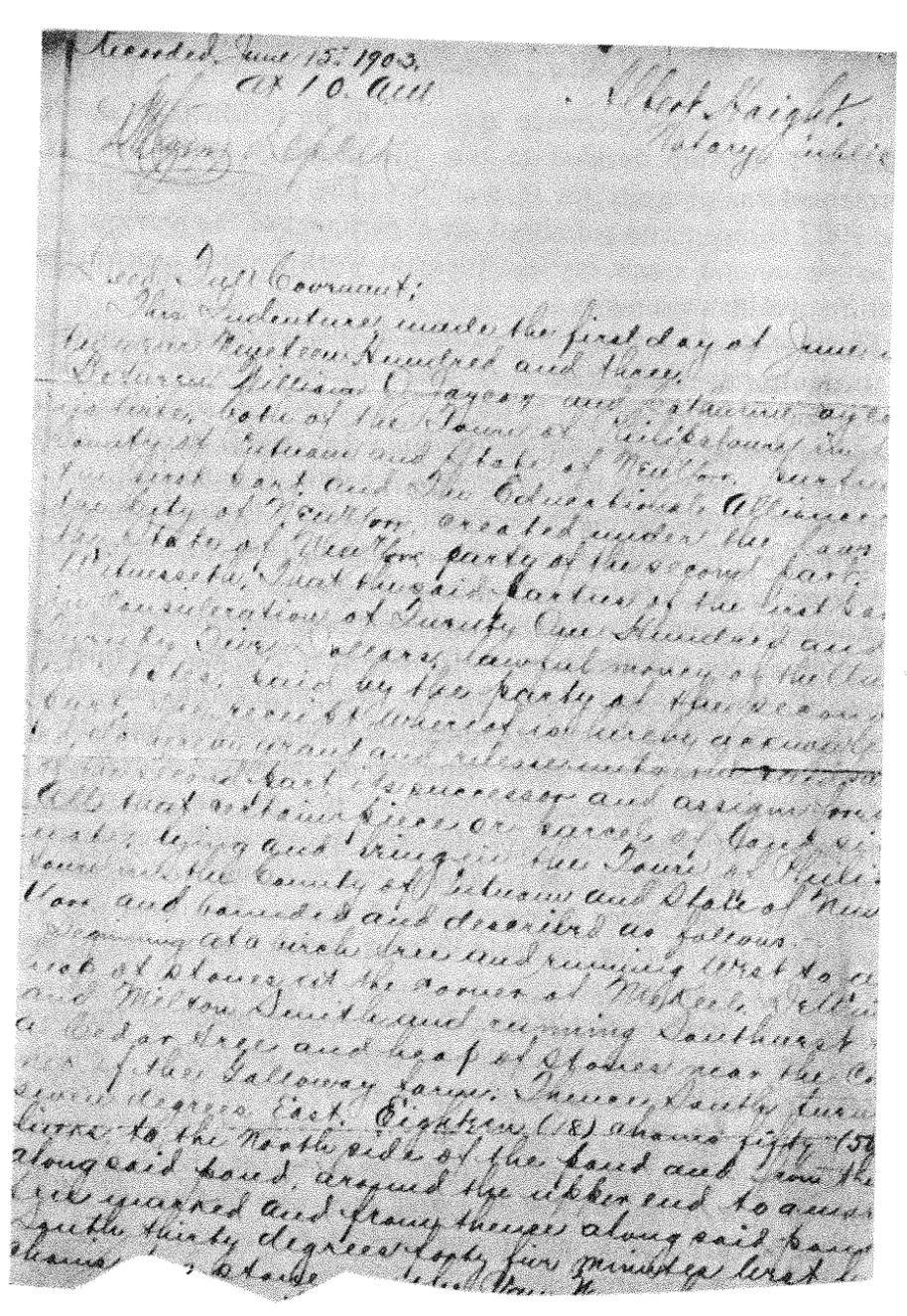
Copy of page 14, Book 91, Corporate Donees, Putnam County Clerk's Office, Recorded June 15, 1903
In time, additional purchases from the Adams Estate by the Eddie Cantor Camp Committee and a grant of land from the Stern family enlarged the parcel to be used for camp purposes.
At the beginning, the kitchen and the dining room were out in the open air, under the direction of Mrs. Bloomer. She and her husband, Leonard Bloomer, and their children lived in a farmhouse on the premises. While Mrs. Bloomer cooked the meals, Mr. Bloomer did the physical work which the camp required. Mr. Moses, a club leader at the Educational Alliance, undertook to run the camp during the summer. Other club leaders of the Alliance who followed as camp directors were: Bernard M.L. Ernst, James Frank, and Ferdinand Kuhn, who took turns in supervising the camp. Mr. Ernst was succeeded for a short time by David Krashes, and in turn by Morris Berk and Dr. E.L. Krackowizer.
E.L. Krackowizer and Morris Berk were the heads of the Boys' Club Division at the Educational Alliance. Both spent summers directing the Alliance camp in the years 1910, 1911 and 1912. At one time Morris Berk organized a camp club of boys who had been at the camp. This club held regular meetings at the Educational Alliance. The club consisted of young men who had at one time or another spent their summer vacations at the camp. Max (Hippo) Schulman was the president of the club. In due time the Camp Club built a stone wash house at the lake front, adjacent to a flowing mountain spring, close to where the Eddie Cantor Playhouse was constructed in later years. The wash house being close to the spring enabled campers to fill their basins for washing instead of dipping them in the lake for water. This same building is now being used as a nature hut at the camp. A plaque on the building erected by the Camp Club at that time reads: "Cleanliness Is Next to Godliness."
The Camp Club was active in doing its bit for the camp in its day. When Max (Hippo) Schulman died in 1931, the Eddie Cantor Committee erected a drinking fountain in his memory, at the camp baseball field.
Just as from little acorns giant oaks grow, so Surprise Lake Camp from a humble beginning of six tents housing 25 campers and five counselors now numbers more than one hundred structures, tents, tentalows, and a variety of buildings accommodating eight hundred and fifty people, including six hundred campers and two hundred and fifty staff members, counselors, kitchen help, grounds people, waiters, porters, administrative help, doctors, nurses, and office workers.
In the early days, the author became acquainted with the camp, as a counselor in 1903 and 1904. Part of his acquaintance was made with a young boy by the name of Eddie Cantor, who was one of the poor boys of the East Side, sent to the camp by the Educational Alliance. Cantor happened to be able to entertain, and at camp fires he entertained. This young boy was known as Happy Cantor because he usually dressed in overalls and when entertaining put a tin can on his head as a token of that particular era when the Happy Hooligan series appeared in the comic section of the daily newspapers, at the beginning of the twentieth century.
With the tin can on his head, Eddie represented Happy Hooligan, and in camp he was called "Happy" Cantor, and because Cantor was a pretty good entertainer, everyone liked him, and instead of the two weeks to which he was entitled, he was kept over for an extra week because of his special ability, and he entertained at all camp fires during his stay at camp.
Camp fire entertainment, at night, under the stars was a thrilling experience for the novitiate from the ghetto environment of the Lower East Side. It left permanent images and created lasting friendships. The recreational facilities consisting of baseball games, swimming, and boating provided the daytime activities. Basketball, tennis, and other athletic events had not yet in 1903 and 1904 made an appeal to the youngsters of the day. Consequently, the camp program was limited in scope, with the emphasis on body building and social life which a short two-week vacation would permit. Of course, the philosophy of camping has since outgrown its formative years and a broad plan of physical, social, educational, and religious activities is an everyday product of current camping, planning, and performance.
The bi-weekly trips to camp were a unique experience. The train stopped at a small station called Storm King, just a little above Cold Spring. From the station, campers and staff were obliged to walk three and a half miles on the Breakneck Road of the Breakneck Ridge, a stony road, with baggage and everything else until they arrived at camp. In later years when trains stopped at Cold Spring and the walk up Breakneck Road became impossible, we took the roundabout road through Nelsonville, for six miles from the village of Cold Spring up to the camp. By then a truck assisted in hauling the baggage to camp.
In the days of the steam locomotive, the New York Central Railroad had water rights to draw off the water from all the lakes along the line. That included Surprise Lake, where the water was tapped from the dam at the westerly end of the lake adjacent to the present girls' swimming dock and dining room and piped into the trough between the tracks all along the line. The locomotive sucked up the water to propel the train of coaches to its destination. This happened early every year and caused the camp authorities anxiety as to whether or not there would be enough water in the lake at camp time for swimming and boating. Fortunately, the underground springs and the mountain streams replenished the supply of water and we were able to survive the annual draining by the New York Central. When the electric engine replaced the steam locomotive the water scare was permanently removed and the annual anxiety ended.
Somewhere the story is told of the origin of the name Breakneck Road. A cow trudging up the rocky path fell and broke its neck-hence the name.
It is interesting to note the origin of the name Cold Spring. At the railroad station there is a tablet on which is engraved the information which tells about its name. General George Washington is said to have stopped at this spot, took a drink of water from a cold spring and remarked-"My, what a Cold Spring!"
George Sokolsky, a famous columnist, a former camper during this period, subsequently wrote about his camping days at the Alliance camp as follows: For us, there was joy in the discovery of new worlds and the camp on Surprise Lake was something never to be forgotten. We slept in tents and ate in a pavilion and had to do the chores, and at night we sat around a camp fire, singing songs. And perhaps we were a little afraid of the darkness and quiet and the hoot owl because we were accustomed to city noises. It was this camp that had the most profound significance on my life and I know what it did for Eddie Cantor, a tubercular little boy who slept in a cellar. It made him a philanthropist because Eddie's work has been to keep this camp growing and expanding. Eddie has never forgotten the day we took the train up to Cold Spring-far from the East Side and we saw our first snake and caught our first catfish.
George Sokolsky writing for the Herald Tribune on August 10, 1936, under the title "I Rise to Protest" had this story about Surprise Lake Camp and Eddie Cantor. “Now the truth of the matter is that have seen the country long before Pitkin invited me to his chicken farm. In fact, I have seen it several times. Very early in my life, long before I had ever heard of Pitkin, when I was a small boy on the East Side, I was given a vacation at the Educational Alliance Camp at Surprise Lake. I believe it was the first year that the camp was opened and the grounds were farmery. There was a long open air pavilion where we ate and a kitchen where we took turns to wash dishes. There were no dieticians and no camp counselors and no auto buses. These things were to come when camps became more civilized. Ours was a rough and tumble place and we slept in tents. The head of the camp was Bernard M.L. Ernst who specialized in collecting snakes. He was lots of fun, but he had an unholy penchant for making small boys clean their teeth-a swagger custom to which we had not heretofore been introduced.
There was a hole in the ground and we filled it with wood, and in the evening we would sit about the camp fire singing, reciting, telling stories. Izzy Iskowitz (or maybe he did not know how to spell it himself) used to be quite a star among us. He had his own teeth then, but his eyes bulged and popped. Somehow we switched even in those days to his grandmother's name, and we nicknamed him "Happy" Cantor. His big ears made him look like Happy Hooligan, a character in the funnies.
"Happy" Cantor needed the camp more than most of us did because he lived in a basement on East Broadway and had very little access to sunlight. But most of us knew the sun only because it was hot in the summer. Green grass we knew, too, because sometimes we got as far as Central Park, and there the grass was green. Or, maybe we went to a lodge picnic, and there was some grass there -but no big trees, and no lake, and no fishing, and no hiking in the woods, and no snakes. These things we did not know before.
We had good times there but we could not stay at the camp too long because other boys had to come. If I remember correctly, Eddie Cantor was allowed to remain over because his legs were so thin.
In 1907, the tents a were replaced by a long bunkhouse divided into three sections named "Kuhn," "Frank," and "Ernst." Electricity was installed, facilities added, and a senior camp established on the other side of the lake. During the period of 1902-1910, all the campers came from the Educational Alliance. The boys came in club groups.
About this time, the Y.M.H.A. had a mishap at its summer camp at Plum Island. Since they needed an area for camping, and since the Educational Alliance had this great big spot, some two hundred acres at Surprise Lake, the Y.M.H.A. was invited to share the area. In 1911, the camp was thus enlarged and became known as The Alliance-Young Men's Hebrew Association Camp.
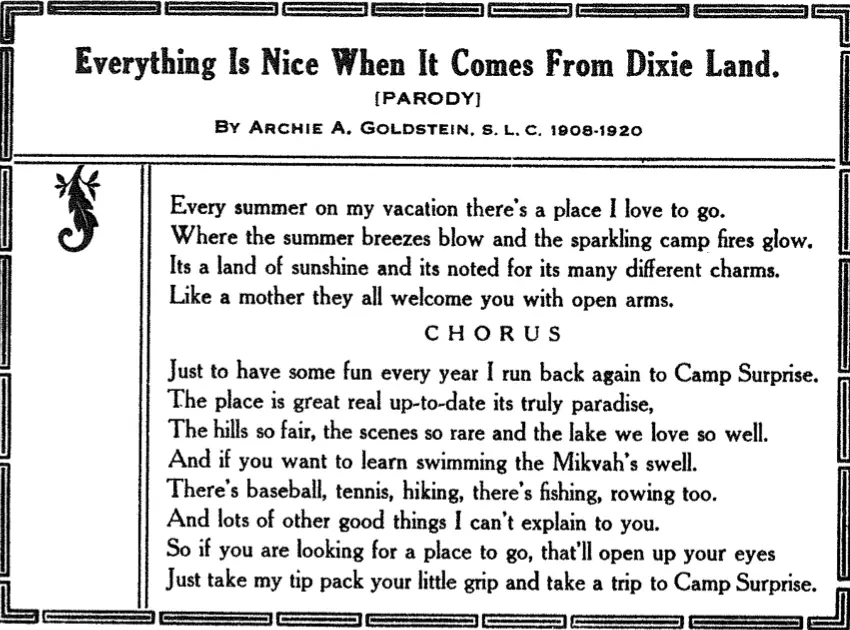
The Y.M.H.A. division was built on the north side of the lake. This part of the camp opened its doors to adult young men between the ages of sixteen and thirty-five. A vacation opportunity was offered to the campers in this section, to the young people who wanted to spend a week or two weeks at Surprise Lake Camp, at the rate of $ 7.00 a week. Actually it was called the Senior Camp. Their activities during the day consisted of a variety of athletic events, such as baseball, track, hiking, swimming, and boating. Evenings, social events took place in a building on the hill known as the White House. The program varied each evening; one night it would be boxing, carefully supervised so that no one was injured or unduly punished. Another evening there was pillow fighting by contestants on gymnasium horses. A third night was devoted to an outdoor camp fire of songs and stories. One of the nights was for the talent show, or as it was then called Amateur Night. The boys displayed their histrionic talents which in the main became interpretations of the ethnic groups of the day -the Irish, the Italian, and the Jewish characters. The performers had a flair for derogatory dialects in imitation of the vaudeville actors of the day, a popular form of entertainment. The author, who was at the time social director of the camp and supervised the Senior Camp evening activities, regarded this type of humor as perverted and banned racial character portrayals of all kinds. This taboo turned the talents of the young men into embryo song writers which resulted in two famous camp songs which have come down to us throughout the years.
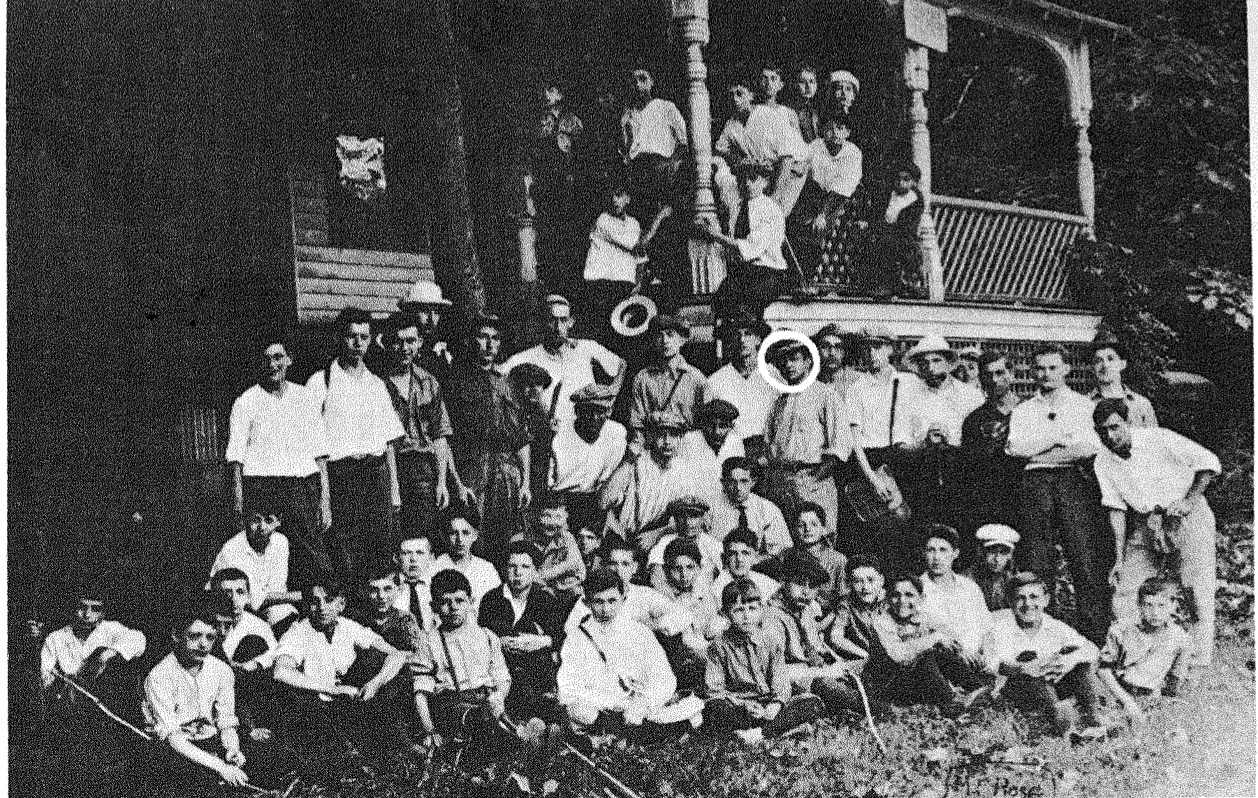
Jack Holman leads a group on a hike to Mt. Beacon, N.Y., circa 1917
One of the interesting day activities was hiking. Large groups indulged. Trips were made to West Point to view the cadets, evening mess parade, to George Washington's headquarters at Newburgh (now a museum), and a climb to Mt. Beacon through trails in the woods. At the top of Mt. Beacon there is a plaque on the monument on which is inscribed the information that here fires were set during the Revolutionary War as signals to the commanders of Washington's headquarters in Newburgh, on the opposite side of the Hudson River.
Originally, when the Y.M.H.A. joined, a Mr. William Mitchell, executive director of the "Y," was the camp administrator. Leon Katzenstein, who succeeded him, was the executive director of the Y.M.H.A. between camp seasons. He was a capable administrator, a kindly person with a ready smile, a gentleman who was loved and respected by all who knew him. At camp he was easily disturbed by unthinking senior campers who violated the regulations. In fact, he was often irascible with offenders and called on his right hand man, George Schoening, for preemptory action. The offenders may have been scaling a balustrade to enter the dining room instead of using the outdoor stairway. Or, after taps the group of hazers had doubled up the linens (frenched), or poured water on the mattresses, or placed stones under the pillows of new campers. In any event, the punishment was immediate dismissal from the camp regardless of the hour, a harrowing situation for all concerned.
George Schoening was the athletic director of the Y.M.H.A, in which capacity he served during summers at camp. He was a powerful man, physically, and commanded the respect of the senior campers. Periodically, he gave a demonstration on the lake by hauling in a strong swimmer with rod and reel. And, old timers were awed by his daily "Rise and Shine" which followed the morning bugle call of reveile.
Robert B. Brodie, one-time social coordinator of the Educational Alliance, and later its president, composed the third part of the triumvirate until he was succeeded by the author of this tale.
The disciplinary methods of Katzenstein and Schoening had to be corrected -but how? On an evening hazing incident the author took over with the consent of Katzenstein and Schoening. The experiment was successful and a new era in camp management ensued. Specifically, a group of twenty young men who were involved were directed to get dressed and to report on the baseball field. There confession was called for with no response. Those accused held conference and came up with a proposition. Since all were not the guilty ones, they indicated those who had no part in the hazing and confessed that six of the group were more or less the instigators and leaders. The writer congratulated the six on their honesty and left it to them to administer the punishment. Again, after a huddle, the six decided that, since they had interfered with the sleep of the campers hazed, it would only be fair that their sleep, too, should be interrupted, and they decided to sleep on the ballfield which they did after collecting their pillows and blankets. Needless to add, it rained during the night and the writer went to the ballfield at 4:00 A.M. and lifted the self-imposed punishment, and the boys went back to camp to finish the night's sleep.
Living Together
HUMAN BEINGS have a tendency to react similarly in all climes and eras. When the Educational Alliance and the Y.M.H.A. joined hands in camping, a spirit of friendship and good will prevailed. But that did not last long. Friction developed between what might be known as the uptown group and the downtown group. It seemed that oil and water did not mix well, and the management had quite a hard time reconciling the campers of both areas. Fortunately, the Neustadt family came along and proposed the erection of a building that was on the site of the camp baseball field to combine the two factions, to create peace between the two groups. The plaque affixed over the fireplace reads as follows:
SIGMUND NEUSTADT MEMORIAL HALL
M C M X I
ERECTED BY HIS WIFE IN LOVING
MEMORY OF SIGMUND NEUSTADT
That is when the name Educational Alliance Y.M.H.A. camp was adopted. Friction continued to be deep rooted until a supervising Board was set up in 1912, under the direction of Mr. Leon Katzenstein and Mr. George Schoening representing the Y.M.H.A. and Mr. Robert Brodie representing the Educational Alliance. Katzenstein took care of the administrative end of the camp operation, Schoening the physical activities-baseball, swimming, boating, etc., and Brodie was the mediator who had charge of the social aspect of the camp program.
The writer succeeded Brodie in that capacity in 1915, remained in that position through 1918; and his resources added to those of his predecessor accomplished what the triumvirate set out to do. During this trying period in the life of the camp, Dr. I. Edwin Goldwasser was the chairman of the Surprise Lake Camp Board, and he kept in touch with us regularly in an advisory capacity. Today, more than fifty years later, his daughter, Marjorie Wyler, is chairman of the Board.
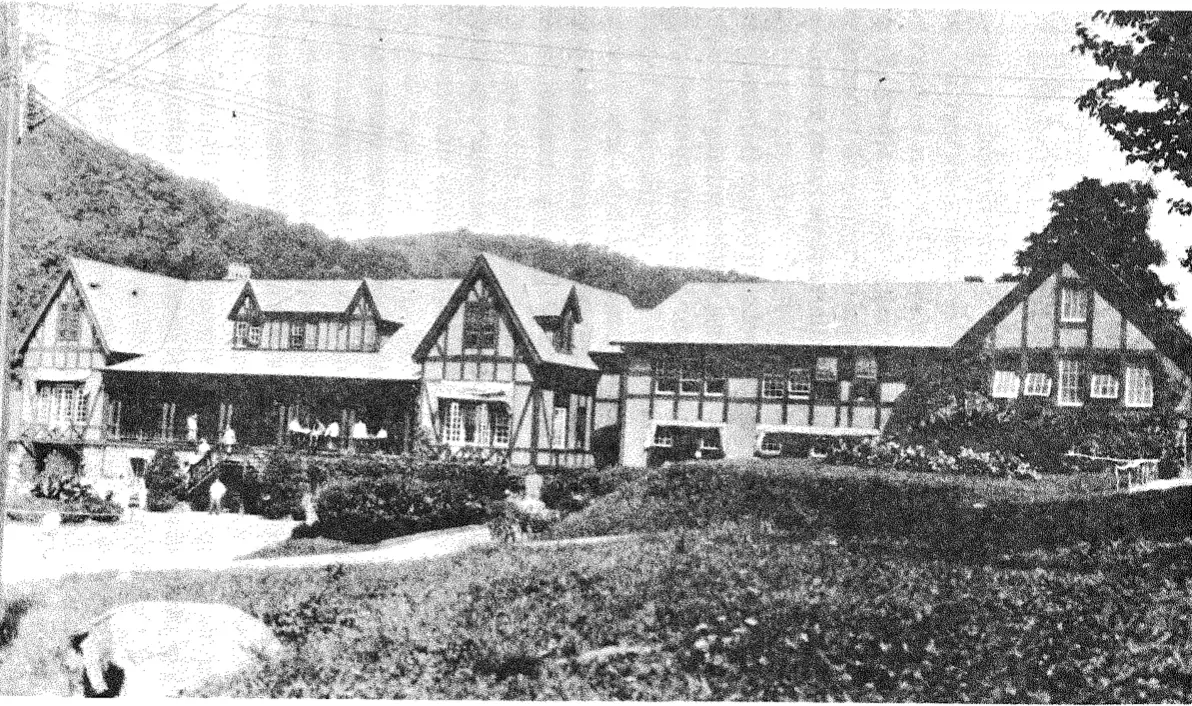
The Sigmund Neustadt Building
With the creation of the Federation of Jewish Philanthropies in 1917, the camp changed its name again. This time to Surprise Lake Camp -and that name has been maintained up to the present time. A Board of Directors was established to supervise the camp, its membership selected from the Educational Alliance, the Y.M.H.A., and from the community at large.
In 1919 Katzenstein was called to the great beyond in mid-season and Max Oppenheimer, who had once been a camper at Surprise Lake Camp, was chosen as his successor. That was a wise and fortunate selection. For the next 35 years, during which time Max Oppenheimer was administrator of the camp, much progress of the camp took place, and Max was an important factor in its success and progress.
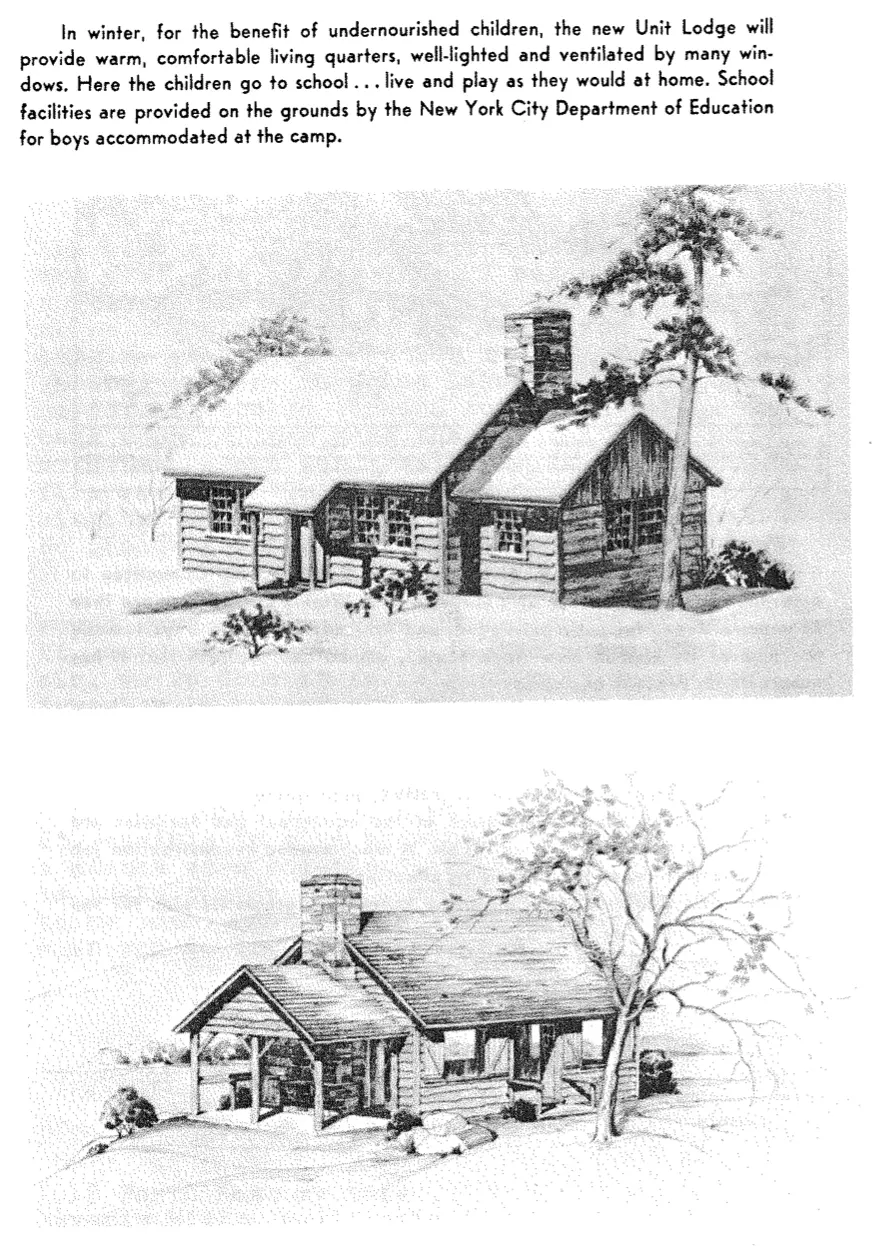
In 1919, also, the Marx family, related to the Bernheim family, became interested in the camp. Through a substantial gift, a wing was added to the Neustadt building, containing a small gymnasium, office space, and rooms for social activities. When the Surprise Lake Camp Board decided to organize a winter camp for boys who were underweight and could not obtain employment certificates (working papers), this new building provided sleeping accommodations and school classrooms. The boys were accommodated for an indefinite period of anywhere from two weeks to six months or a year until they were qualified to meet the requirements for employment certificates.
The City of New York supplied and paid the teachers assigned to our classrooms, and the camp housed and fed the teachers who were accommodated. The necessary equipment for the classrooms, desks, seats were provided by friends of the camp interested in this project which became known as Winter Camp.
The Winter Camp started on a small scale with forty campers, gradually growing in numbers until it reached a total population of seventy-five. Additional sleeping quarters were provided by the construction of a special building through a contribution of $25,000.00 made by a group of women known as the New Yorkers League. These women were particularly interested in the purposes and work of the Winter Camp. That group carried on for a number of years until the Winter Camp function was ended. The sleeping quarters are now used exclusively as a dining room. An appropriate plaque commemorating the New Yorkers League benefaction hangs on the wall of the building.
THIS BUILDING WAS PRESENTED TO
SURPRISE LAKE CAMP BY THE NEW YORKERS
LEAGUE FOR VOLUNTEER RELIEF
JUNE 1938
During the twenty years of the existence of the Winter Camp for the building up of boys for employment certificates, the Eddie Cantor Camp Committee, organized in 1923, was a dominant factor in financial support. With the stock market crash of 1929 the Winter Camp suffered severely because of lack of funds to operate. When Eddie Cantor received the news of the plans to shut down the Winter Camp, he sent a telegram from California, "Don't let us make the kids suffer because of our trials and tribulations." He also said that if we can raise half of the amount of the Winter Camp budget, which was $30,000.00 a year, "I'll give you the other half."
In brief, he promptly subscribed $15,000.00 to enable us to continue the operation of the Winter Camp during the depression years. Eddie's telegram was circulated among members of the Eddie Cantor Camp Committee and friends. One gentleman, Sam Charap, who contributed regularly, promptly responded by subscribing $1,000. When the writer informed Charap that he could hardly afford it in view of his known losses in the stock market, he answered, "If I can throw away $100,000 there -certainly can give $1,000 to Surprise Lake Camp," which he did. And other sources too contributed, and the Winter Camp continued to function until the late forties. One of the sources was Henry J. Bernheim, one-time chairman of the Surprise Lake Camp Board. When the writer appealed to him, Bernheim subscribed $500.00 a year regularly for the Winter Camp.
Henry J. Bernheim, in his last will and testament, remembered the Surprise Lake Camp, and so years later when his will was finally probated, Surprise Lake Camp became the beneficiary of approximately $25,000. In 1971 a building at the camp was dedicated to the Bernheim family, which building now bears an appropriate tablet commemorating the occasion.
THIS FAMILY HOME IS DEDICATED TO
LEONARD BERNHEIM
AND THE MEMBERS OF HIS FAMILY WHO
FOR 50 YEARS SERVED THE CHILDREN OF
SURPRISE LAKE CAMP
SUMMER 1971
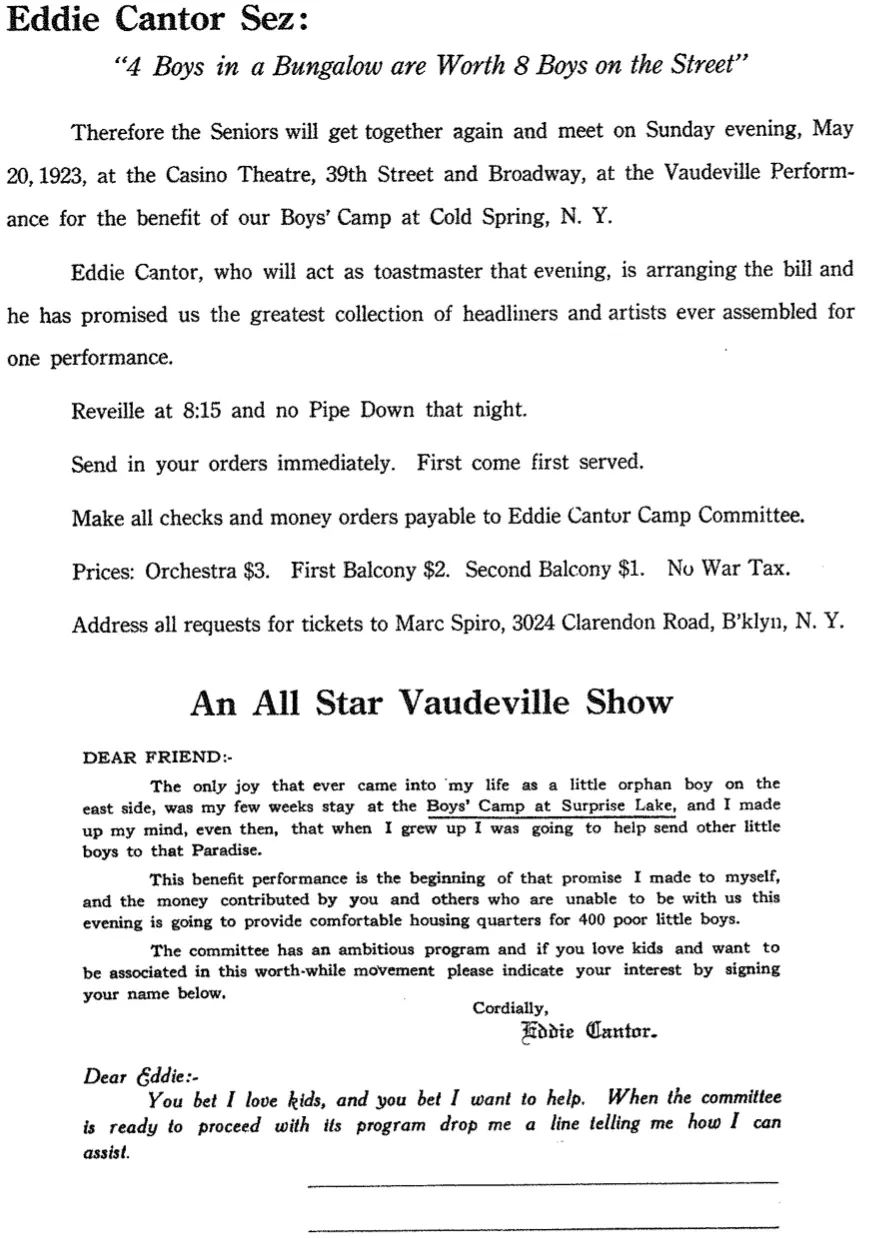
For the first Eddie Cantor Theater Party
Leonard Bernheim, a nephew of Henry J. Bernheim, became a member of the Surprise Lake Camp Board, and subsequently chairman of the Board.
As the years rolled by many of the beneficiaries of camp vacations at Surprise Lake Camp-when they grew to manhood and established themselves in their life careers-remembered the joyful days spent at the camp in their youth and repaid with substantial financial gifts to the camp. Notable among this group was the late Eddie Cantor. As soon as he became an important figure in his profession he gave of himself and of his services to provide opportunities at Surprise Lake Camp for a myriad of youngsters of our community.
In 1923 an Eddie Cantor Camp Committee was formed which is still in operation. This committee, actually a camp alumni association was instrumental in raising funds to rebuild the camp structures twice in its long history, once in the early twenties and again in the forties. In 1946 an auxiliary group, the Women's League of the Eddie Cantor Camp Committee, was organized, and six years later a camp for girls was established at Surprise Lake. Here again, from a small beginning of seventy-five girls at camp, today three hundred girls are accommodated for three-week vacations, making a total of nine hundred girls during a camp season.
All fund raisers for worthy causes know that the most successful method of interesting a prospective donor is to have him pay a visit to the agency in operation., That is what is known as a face-to-face solicitation. That is what was done to revive Eddie Cantor's interest in the camp. He had been a beneficiary of the camping experiences at Surprise Lake as a boy. The visit to the camp, the home of his early youth as a camper, aroused in him exciting memories and he became enthusiastic about what he saw. Eddie inquired how he personally could be of help and that led to the suggestion that in his position in the theatrical world a theatre party at a New York City theatre should be arranged for the benefit of Surprise Lake Camp. That suggestion was acceptable. Eddie garnered the talent and in our first attempt we filled the theatre and realized a net profit of $5,000. The money was used to replace the canvas tents which were getting old and seedy, and they were replaced by substantial tentalows, made of lumber. That first year we put up 50 tentalows, each housing four campers. These new structures took care of about half of the camp population of the day. Every year thereafter, with Eddie Cantor's enthusiastic and persistent help, theatre parties of exceptional entertainment were produced at New York City theatres which netted annually sizable sums of money. The funds rose by degrees from $5,000.00 to $10,000.00 to $15,000.00 and as high as $25,000.00 annually. Naturally, with funds available, construction of other areas besides tentalows was accomplished. We rebuilt the road from the camp proper down to route #9. We improved the kitchen equipment, engaged in gardening to beautify the grounds, and made numerous physical improvements around the camp.
Available funds gave the Surprise Lake Camp sound ideas. Why not use some of the money for scholarships for camp? With the help of a school and home visitor attached to the local schools of the Lower East Side, large numbers of boys were selected for camp vacations at Surprise Lake Camp. The number rose to four hundred scholarships a year, priced at six dollars for the two weeks, the money supplied from the treasury of the Eddie Cantor Camp Committee.
In the course of the growth and development of the camp, a section of the camp on the north side of the lake, occupied by the Y.M.H.A., was set up in what was called the Permanent Junior Division. Here youngsters were accommodated for the entire camp season of eight or nine weeks, for which they paid a nominal sum of $90 or $100 or $125 for the summer, the rise in price becoming necessary as costs of operation increased. Now we had two camps for young boys, a camp group on the Y.M.H.A. side, the Permanent Junior Division, and a group on the Educational Alliance side, the Temporary Junior Division, temporary because these boys were at camp for two-week periods while the others remained all season. Again, the old-time friction raised its ugly head, between the uptowners and the downtowners. The former were the Permanents who had means to pay, the latter were "Temps" who could not afford a full season. Curiously, some coast contributors to the Eddie Cantor Camp Committee Fund pointed out that we were not doing justice to the youngsters of our community by entertaining a Permanent Junior Division and a Temporary Junior Division. The complaint was understandable, and the friction a bone in the throat; so, the Board resolved to discontinue the Permanent Junior Division and use the facilities exclusively for the less privileged young people of the community. Now, that move had an impact on the financial setup of the camp. The Eddie Cantor Camp Committee came to the rescue by contributing $10,000.00 annually to make up loss of income resulting from the suspension of the Permanent Junior Division, and that annual contribution was carried on up to the financial crash of 1929.
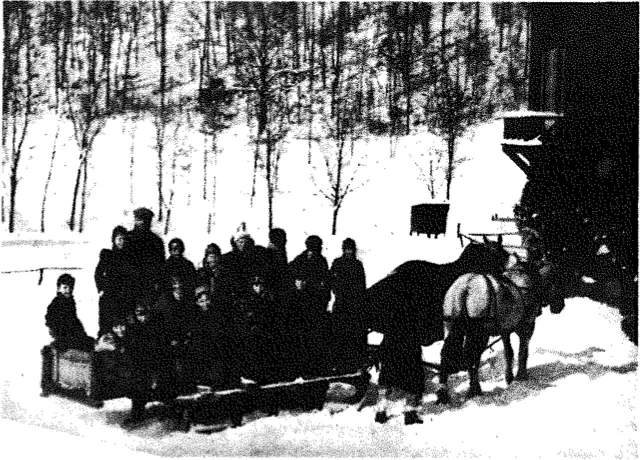
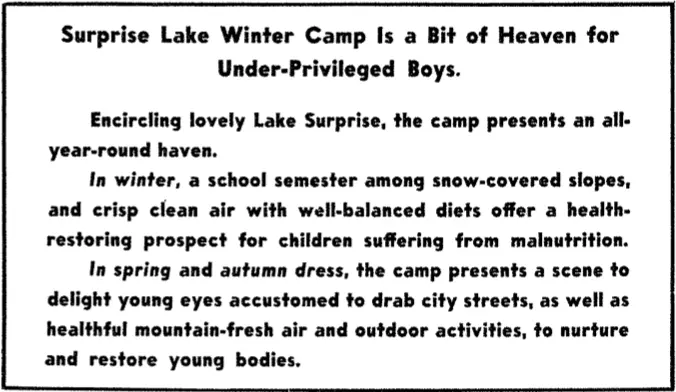
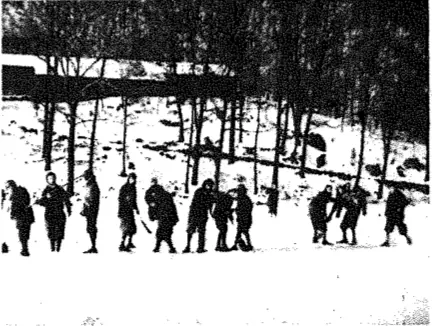
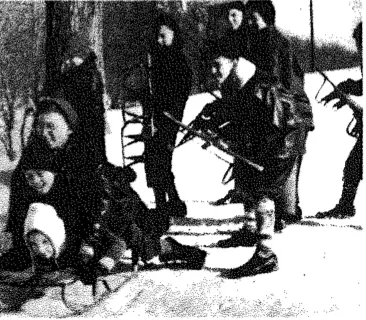
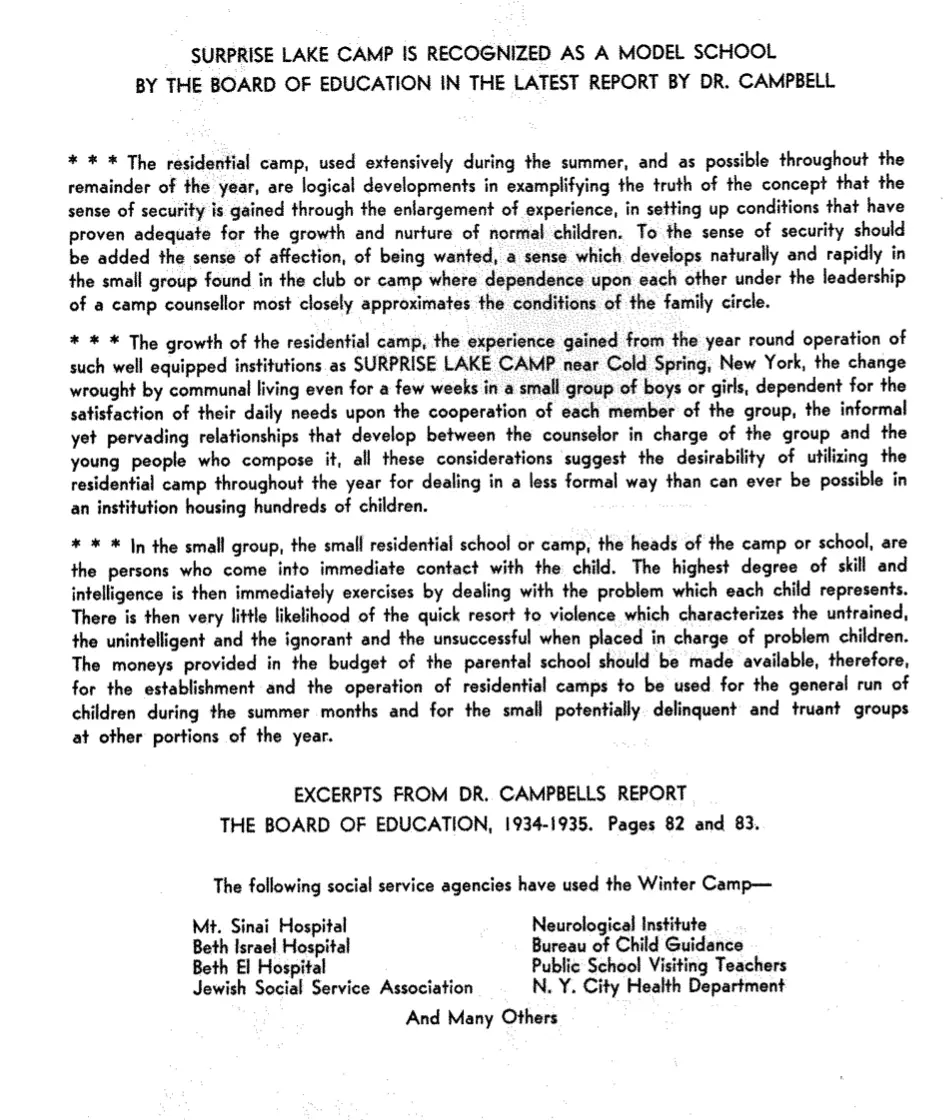
The Winter Camp previously described was discontinued in the late '40s. The high population of 75 fell by degrees in ensuing years to 40. A study was made by Dr. Nathan Cohen, an expert in social service, which brought out facts making this particular type of camp no longer necessary. Conditions were changed. Financially, people were better off and did not require their young children to work. The City of New York conducted an educational program which informed the public of nutrition values. That information coupled with improved financial situations helped parents solve the weight problem necessary for employment certificates. The women's group known as the New Yorkers League no longer had raison d'etre and shortly thereafter ceased to exist.
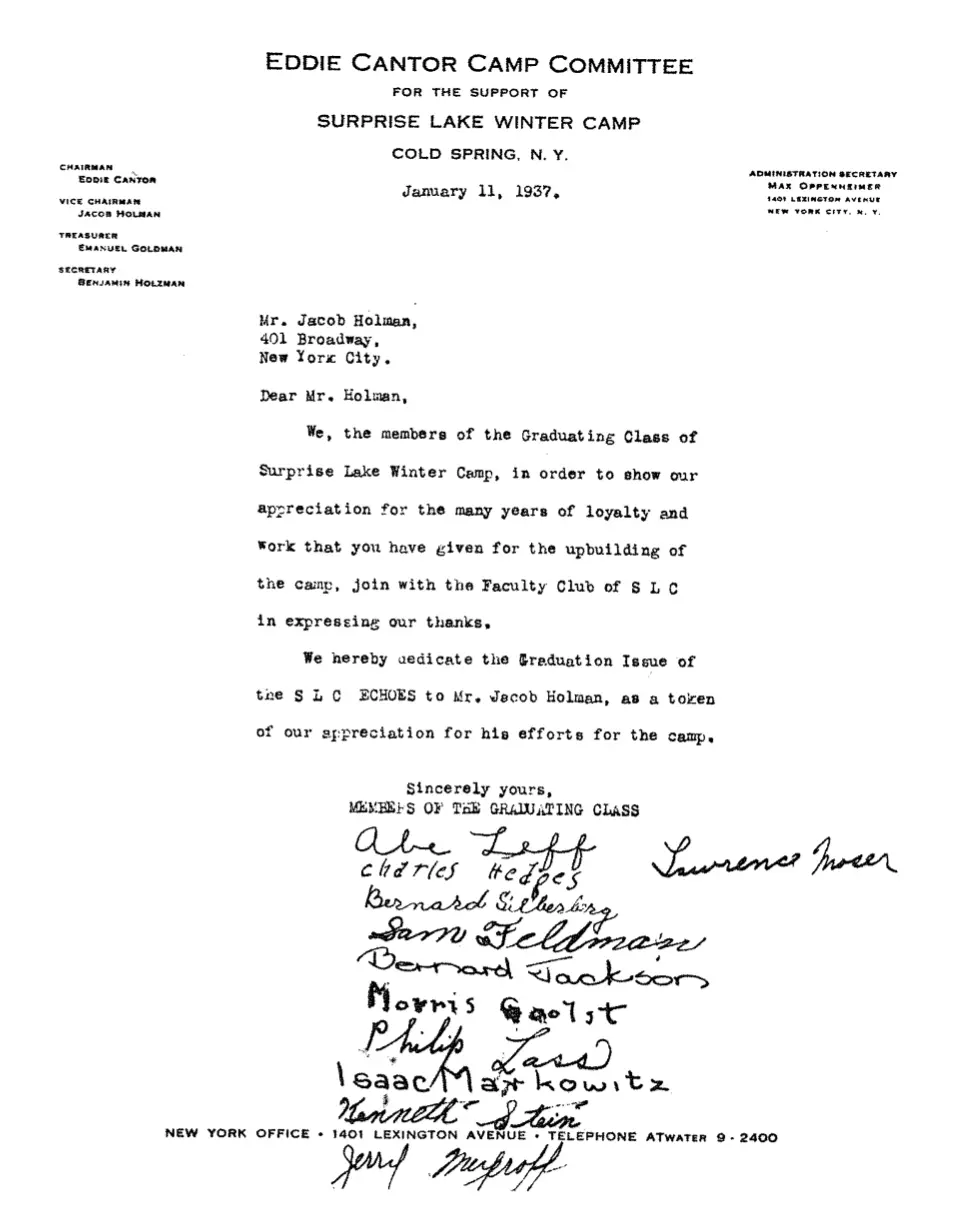
During its operation the winter school held regular graduation exercises twice a year, once at the end of January and again at the end of June. The author attended all of the commencements as did groups of women of the New Yorkers League. The functions were very much like those held in the regular city schools: songs, recitations, speeches, and awards. A letter written in January 1937 by the members of the graduating class, signed by all of the graduates of that particular class, is here reproduced and shows the serious aspect of the campers in attendance.
Only recently, in the "Re-Echoes," the monthly publication of the Surprise Lake Camp Alumni Association, an article was printed attesting the value and influences of the Winter Camp of former years. The quotation which follows from a letter to Sam Peyer, vice president, speaks for itself. Last summer I met Larry Sallberg at a hotel in the Catskills. Today he is a successful man, a father of three, and in good health. In 1939, Larry was a sickly undernourished kid who was sent to Surprise Lake Camp to put some weight on his bony frame. He was one of the rare breed who spent the months of September through June at Surprise Lake Camp. For want of a better name these boys were called "Winter Campers. As a matter of fact, scrawny Phil Levinowitz, the present president of our Alumni Association, was also previously a winter camper.
Larry informed me that campers were constantly ordered, cajoled, begged, and required to eat anything and everything on their plates. In fact, once a week the boys were weighed. Throughout the week, prior to the weighing ceremony, they were warned that if they didn't put on some weight they would immediately be sent home. These were just empty threats, of course, made for the welfare of the children.
When I informed Larry about the existence of the Alumni Association he immediately wanted to become a member for he remembered what Surprise Lake Camp had done for him.
The original organizers of the Eddie Cantor Camp Committee consisted of the narrator of this history and the following: Emanuel Goldman, Israel Cummings, Louis J. Meyers, Isidore Goldberg, Milton Weill, who later became president of the Federation. Abe Abramson, Harry Henshel, Ernie Janis, Irving Weissberg, Nat Holman, Abe Goldman, Morris Goldman, Daniel Lipsky, Abe Lipsky, Sylvia Picker, and Clare Wolf. All of these folks helped financially in carrying on the work of the Eddie Cantor Camp Committee. In time, a women's auxiliary group to replace the dissolved New Yorkers League was created as a result of a recommendation of Mrs. Frances Ross, a sister of Emanuel Goldman. Accordingly, Mrs. Ross earned the honor of being the founder of the Women's League of the Eddie Cantor Camp Committee. She, together with a group of dedicated women consisting of Jenny, Anderson, Norma Barach, Dolly Grad, Celia Greenfield, Daisy Holman, Florence Jassy, Flo Landsman, Adah Lewis, Pearl Marx, Ida Mitchell, Anne Nadler, Fannie Oppenheimer, Mrs. Barach's daughter, Barbara Schlussel, built up an organization second to none in its helpfulness to Surprise Lake Camp.

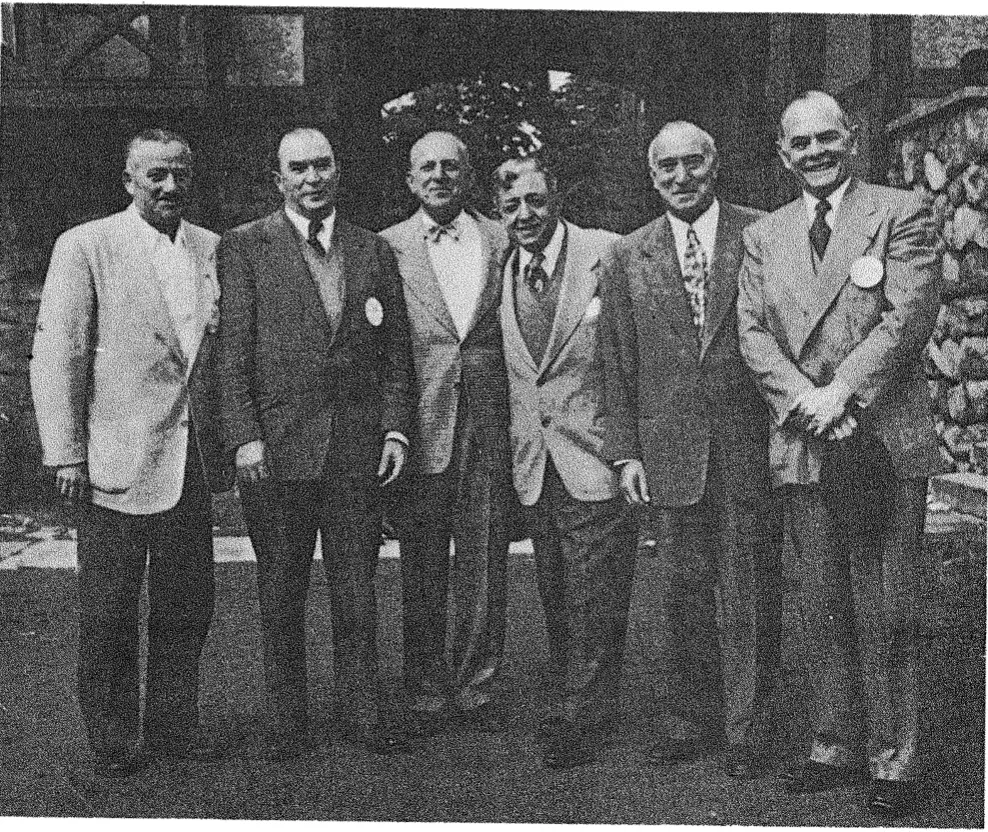
Some of the founders and members of the Eddie Cantor Camp Committee
Isidore Goldberg, Abe Abramson, Louis Meyer, Jack Holman, Israel Cummings, Manny Goldman
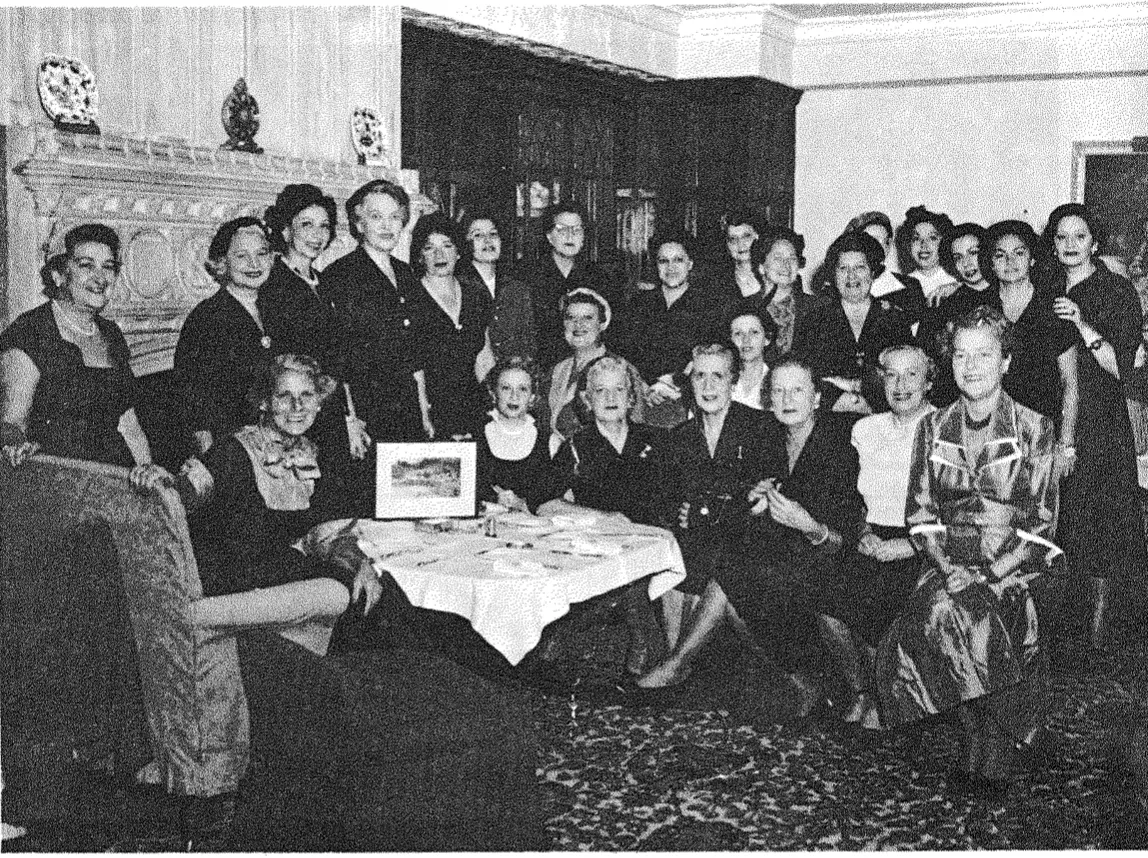
Members of the Women's League Eddie Cantor Camp Committee
Bottom Row, right to left
Frances Ross - Daisy Holman - Molly Leder - Lee Cummings - Edna Goldman - Marylin Schwartz - Ella Grunberg
Middle Row, right to left
Phyllis Goldman - Sybil Baumrin
Second Row, right to left
Flo Jassy Ida Mitchell - June Howard - Barbara Schlussel - Adele Suslak - Ginny Anderson Rhea Cohen - Adah Lewis - Ebby Ravenson -Natalie Danenberg - Fanny Oppenheimer - Celia Greenfield - Norma Barach - Dorothy Gernsback - Dolly Grad
The Women's League initiated their helpful activity with an annual luncheon. This created a situation which had to be straightened out with the Federation of Jewish Philanthropies. An appointment was made with Mr. Joseph Willen, one of the executive directors of Federation. Since he set the rules and regulations for all types of fund raising, we were obliged to comply. The writer together with Mrs. Ross, Mrs. Marx, Mrs. Mitchell, and Mrs. Landsman met with Mr. Willen at the Federation offices. Mr. Willen was familiar with activities of the Eddie Cantor Camp Committee, about their annual theatre parties, and he knew that most of the money raised came from the coast through the efforts of Eddie Cantor. Accordingly, now since there were two groups, he recommended that one of the groups had to discontinue its fundraising operations. The Eddie Cantor Camp Committee gracefully stepped out and allowed the Women's League of the Eddie Cantor Camp Committee to carry on.
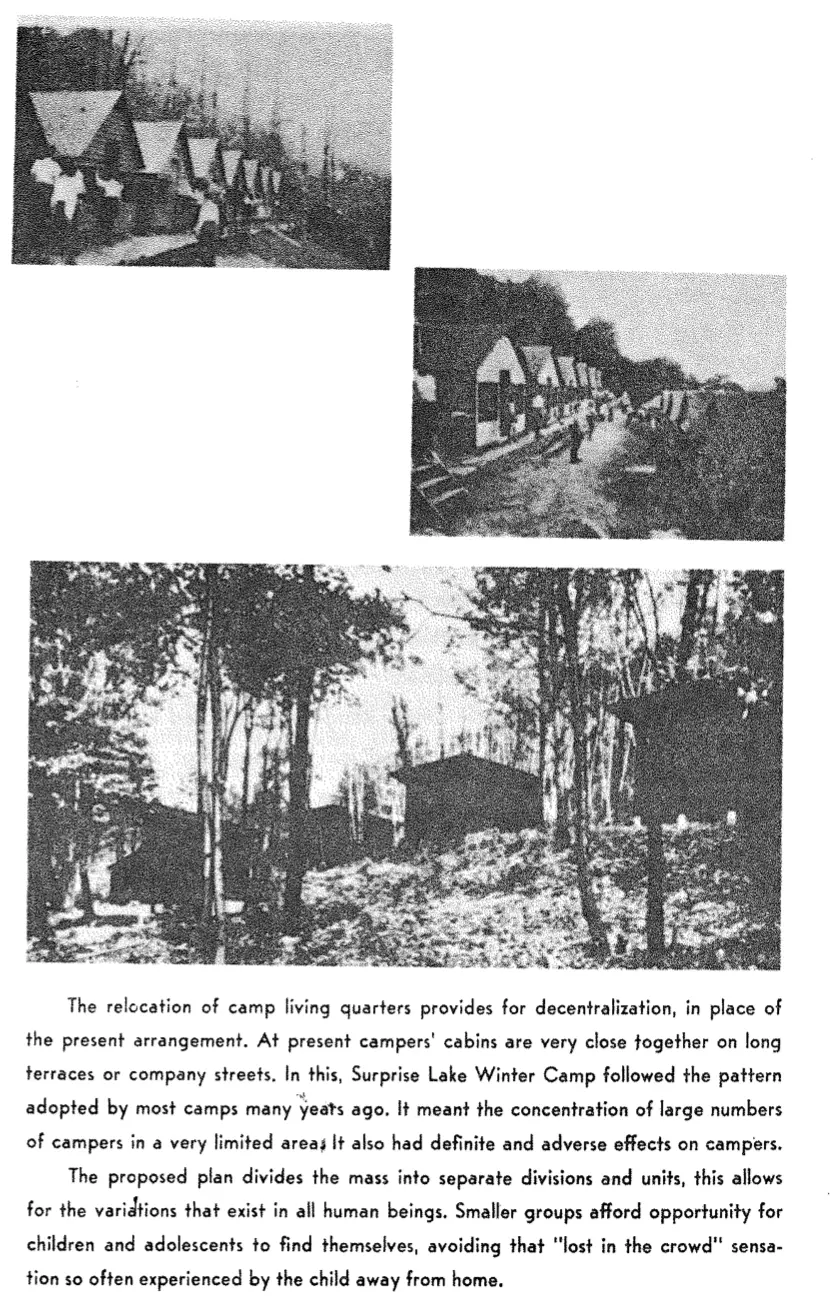
The original fundraising affair of the Women's League, namely the annual luncheon, was nominally priced and produced nominal results. The women became ambitious, and the luncheon progressed into an evening supper dance affair. The supper dances, elegant social functions, now in their 25th year, netted considerable sums of money, running anywhere from five to ten, fifteen, twenty thousand dollars a year. This significant social function is still held at the plush Plaza Hotel. The total sum raised through the efforts of this group to date is in excess of $400,000. While the money raised went into the general fund of the Eddie Cantor Camp Committee for camp purposes, it did not take long for the germination of an idea to establish a camp for girls on the Surprise Lake grounds. The idea took effect and a girls' camp was built, small at the beginning, in comprehensive units, in tune with the changing philosophy of camping, decentralized groups as opposed to condensed. Progressively, the accommodations for girls grew so that today they equal those of the boys: three hundred girls and three hundred boys for the three camp periods a summer, totaling nine hundred of each or a total of eighteen hundred youngsters for the camp season.
When the girls' camp was organized, their meals were served in the common kitchen and dining room at the boys. camp. As the girls' camp grew in size it was resolved to build a separate kitchen and dining room for them. Result-a beautiful dining room at the far end of the lake, accommodating three hundred at one sitting, including staff. The funds raised by the Women's League enabled them to spend $60,000 in the construction of this edifice plus an additional $15,000 for equipment.
A New Era in Leadership
Asher Melzer appeared on the scene of Surprise Lake Camp about 20 years ago as an assistant to Max Oppenheimer, the camp administrator. Two years later Max retired and Asher was assigned the top job held by Max for 35 years prior to his passing. The wonderful record compiled by Max Oppenheimer presented a challenge to Asher Melzer. The following years proved conclusively that Asher was a fitting successor to Max. Furthermore, Asher has done an excellent job to date, initiating numerous ideas for camp operation, most valuable of which has been the establishment of a program wherein Israeli men and women come here and act as counselors during the camp season at Surprise Lake Camp. The success of this particular undertaking attracted the attention of other Federation camps. To satisfy the demands of these camps, Asher Melzer has been delegated by the National Jewish Welfare Board to make an annual trip to Israel for the purpose of screening and enlisting counselor applicants. From the half a dozen who came to Surprise Lake Camp in 1966, eighty now come to this country for counselor positions in Federation and Y.M.H.A. camps, of which number twenty were assigned at Surprise Lake Camp this past summer.
As the camp grew under Asher Melzer's supervision, so did Asher Melzer grow. Today, he is an acknowledged authority on camping, and he is frequently invited by other camp organizations to lecture on camp philosophy and progress of the day. In the past year, there appeared in book form "A Program Guide for Summer Camps" by Asher Melzer, published by the American Zionist Youth Foundation, to provide aid and guidance to camps which seek to strengthen the camp program in the area of Jewish content.
Changing Philosophy of Camping
Progress in camp philosophy which brought about decentralization brought about a change in the length of a camp period. For years, campers were enrolled for two-week periods, too short a time to be of much help to campers. We switched from two-week periods to three-week periods on the theory that an extra week would provide more effective camping and would be of greater advantage to the children. Considering that it takes a new camper time to make an adjustment, the three-week period was adopted. Here again, we were confronted with the financial impact on Federation. The situation was resolved by spreading the change over a period of three years, adding three weeks to one third of our camp population each year until the idea took full effect. Of course, if three weeks are better than two, then two four-and-a-half weeks or one three and one six are still better, and another change may come to pass in the years ahead.
In 1958 I chaired a committee on Philosophy and Program which recommended the following: So much has been written on the value and necessity of camping for children that we propose a brief definition of the purpose and philosophy of camping. In our opinion camp, in a measure, camp is really a continuation of a child's education. It is actually school during the summertime. The summer camp is a school in the open where opportunities are provided for life in the country as against life in the city. The child lives in an environment where there are new and different fields of endeavor at hand, enabling him to acquire skills, to make new friends and to learn to live with others, and to have fun. As a result of that type of experience three important assets are attained by the individual, (a) a feeling of fellowship, (b) confidence built on self-reliance, and (c) a sense of responsibility.
The program provided for our children fills the purpose outlined above. In the first place they learn things that they cannot learn in the city. Learning from natural phenomena supplements knowledge acquired from books. The discipline of living with others definitely helps to develop a sense of responsibility so necessary for the full growth and development of children.
In our program planning the idea is to have the child feel that the program is not superimposed but that the child has an opportunity to express himself and to participate in making up the daily program of activities. All of this is done under the leadership of the counselor who in turn is supplied with a complete set of counselor aids for camp organization and program. In this manner all of the activity is guided, controlled, and under constant surveillance. The maintenance of discipline follows naturally.
To all of which we recommend, depending, of course, on the age and need of the child, more emphasis on athletic games to develop physique as well as skills.
Enthusiasm always catches fire. The author's flame was instrumental in exciting and interesting others in Surprise Lake Camp. For fund raising the most effective procedure is to encourage a prospect to visit the camp while in operation. Twenty years ago, proceeding on this thought, the author brought to camp on one of his visits a Detroit gentleman named Irving Goldman. The man was duly impressed with what he saw. His check of $200.00 drawn to the order of Surprise Lake Camp has been his annual contribution since the occasion of his visit.
Another individual similarly impressed by the author made a magnificent contribution of 1,000 shares of American Telephone and Telegraph stock, listed at the price of $67.00 per share. Annual scholarships for disadvantaged children are awarded, as a result, from the dividends of the Jack Roth fund.
The Educational Alliance Alumni Association contributes $5,000.00 annually for scholarships.
David Rose, at one time a member of the Surprise Lake Camp Board, on a visit to the camp, was intensely impressed with the camp program, its facilities, and its operation. After his visit, he pledged and contributed $10,000.00. He wanted no credit but we built and a dedicated a lodge in memory of his departed wife.
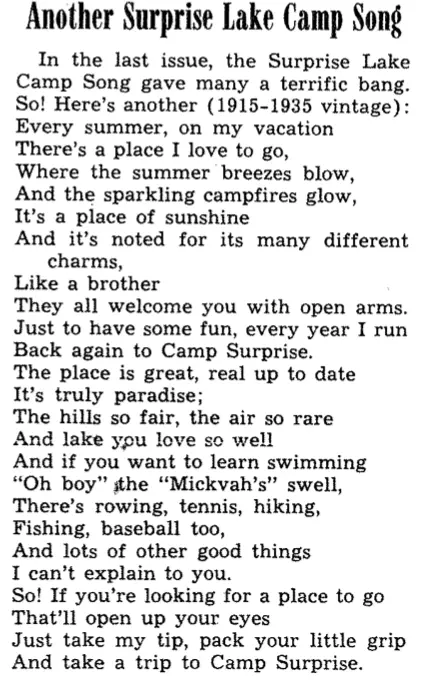
Song writers, one subsequently a professional and the other a gifted lyricist, wrote songs while they were campers at Surprise Lake Camp. The compositions of these two young men have lasted and our campers still sing "Surprise Lake Camp How I Love You" written by William Tobias, the one who became a professional, and "Nestling 'Neath the Shady Trees" written by Archie Goldstein. Incidentally, Tobias is a distant relative of the late Eddie Cantor.
Expansion and enlargement of the camp made it necessary in the 1950's to improve and enlarge our system of sewage drainage. Engineers engaged for this project drew a blueprint of a system regarded as necessary, in view of the size of the camp, which entailed an expenditure of $125,000. Federation was involved in a Building Fund Campaign in the 1940's and Surprise Lake Camp was delegated to raise $250,000. The Board did collect in cash and pledges about $70,000.00 when the campaign was abruptly ended because of financial problems. Federation informed our Board that the aforementioned $70,000.00 would not be forthcoming because funds were needed for maintenance and, if we were to proceed with the sewage undertaking already contracted for, it would be incumbent on us to raise the money. That put our Board in a precarious and compromising situation. In a year or two, though, with improved financial conditions, Federation granted Surprise Lake Camp a subvention of $47,000.00 which together with the $70,000.00 enabled us to complete the construction of the sewage plant, built on the principle of a filter bed, septic tank, and chlorine equipment. It has stood up well these past twenty years.
If the Eddie Cantor Camp Committee organized in 1923 can be regarded as an Alumni Association, there is now in existence a group which calls itself the Surprise Lake Camp Alumni Association. In time this will be a worthy successor to the original organization established in 1923. The current alumni group was created in 1961 by Henry Cohen, a former head counselor at Surprise Lake Camp for about 30 years, together with other interested and enthusiastic staff members, Henry Goldman, David Corn, Manny Herman, Herbert Fishman, William Jacobs, Sol Clemenko, Asher Melzer, Sam Peyer, and Phil Levinowitz. Today, this Alumni boasts a membership of 250. In the past few years, through its membership, this group has contributed equipment and nominal funds to the camp, capped this year by the erection of an 'Alumni Hall,' built on the lake front, dedicated last June, for which $10,000.00 was contributed. The group has also established an Alumni Scholarship Fund to help needy children get to camp.
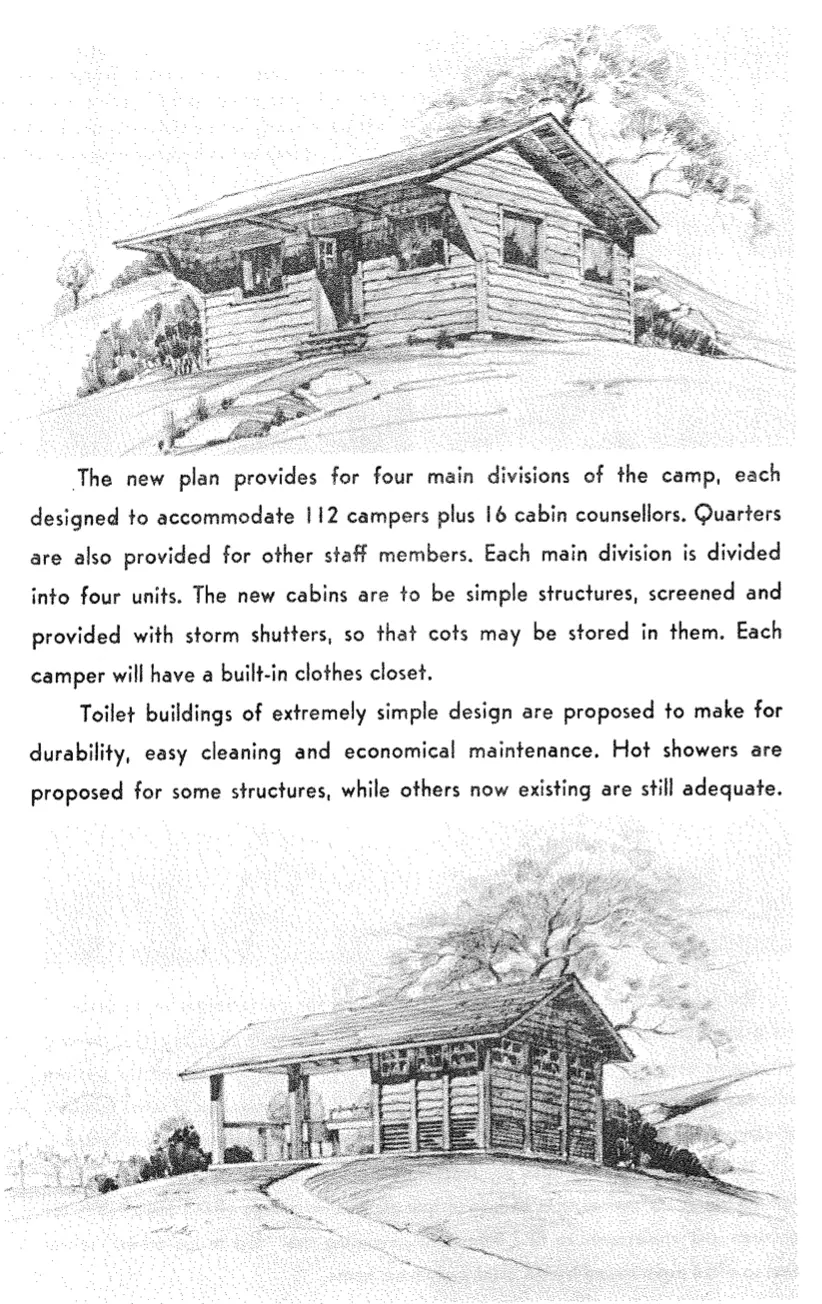
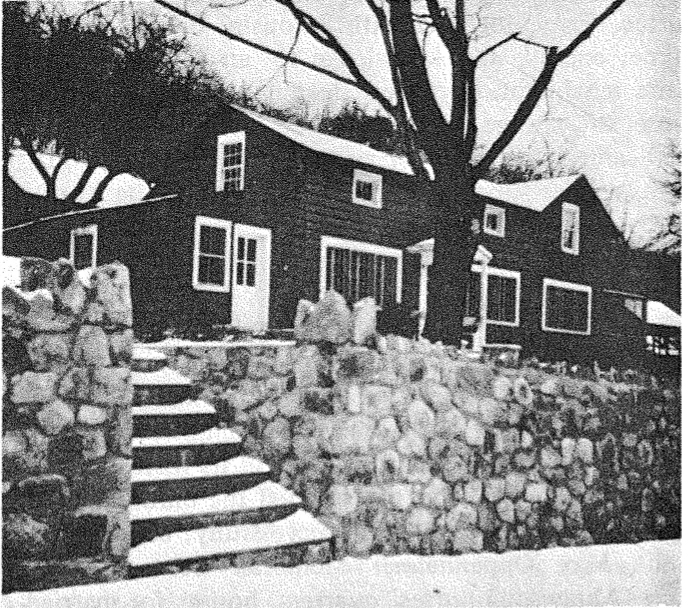
On the subject of construction of buildings at Surprise Lake Camp, for a period of 25 years beginning with 1940, the Board was fortunate in having on its membership two fine men, father and son, in the persons of Sydney and John Crystal. These two men brought their valuable experience in the real estate and building field to Surprise Lake Camp as co-chairmen of the camp's Building and Grounds Committee. They, together with a cousin, Fabian Crystal, gave of their time, energy, and knowledge to an enormous building program, the rehabilitation of new sleeping quarters, the Eddie Cantor Playhouse, the sewage system, the new kitchen, and dining room for the girls' camp. Every call for visitation at the camp with architects, engineers, regular supervision of the progress of the work, consultation as required with attorneys, insurance companies and Federation, was responded to by the Crystals graciously and faithfully. No finer example of devotion to a voluntary task could be presented. When the father's time of life was ended, the son carried on until personal obligations compelled him to discontinue his work on the building committee however, John is a very active member of our Board, serving as chairman of our Admission Committee. Fortunately, the Board had another experienced builder in its roster in the person of Charles Weinberg who since has carried the burden of the Building and Grounds chairmanship most successfully, completing in recent years the Max Oppenheimer Memorial Canteen Building, the Abraham (Abramson) nurses' quarters, houses for married couples, the Isidore Goldberg Memorial Arts and Crafts Shop, the Marjorie Cantor Medical Clinic in the girls' camp, the replacement of seats in the Eddie Cantor Playhouse, the recreation and crafts building in honor of Frances Ross in the girls' camp, the Bernheim Family House, and the erection of a house for the assistant caretaker of Surprise Lake Camp.
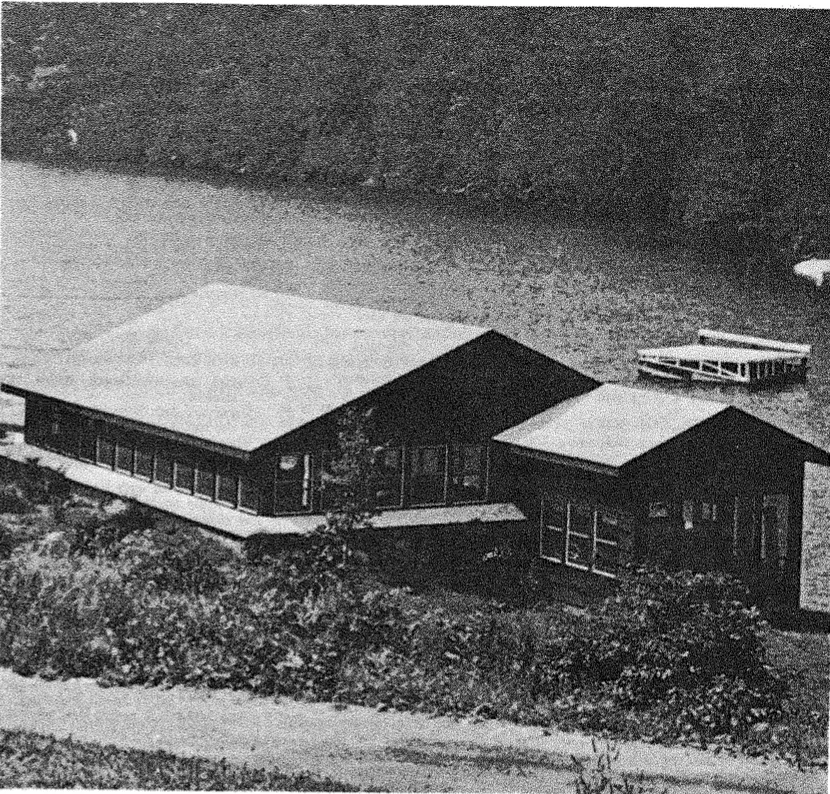
The new Alumni Hall erected 1971
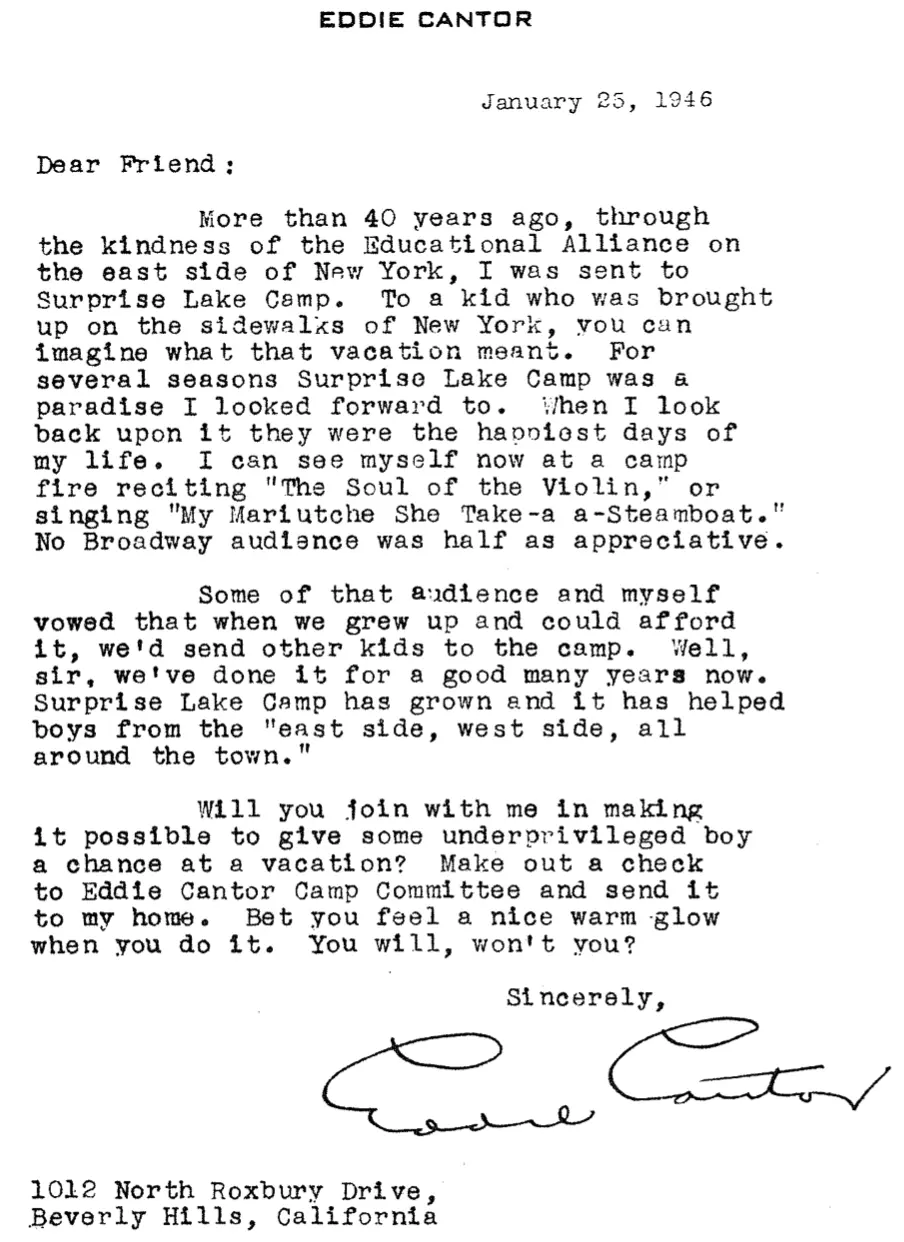
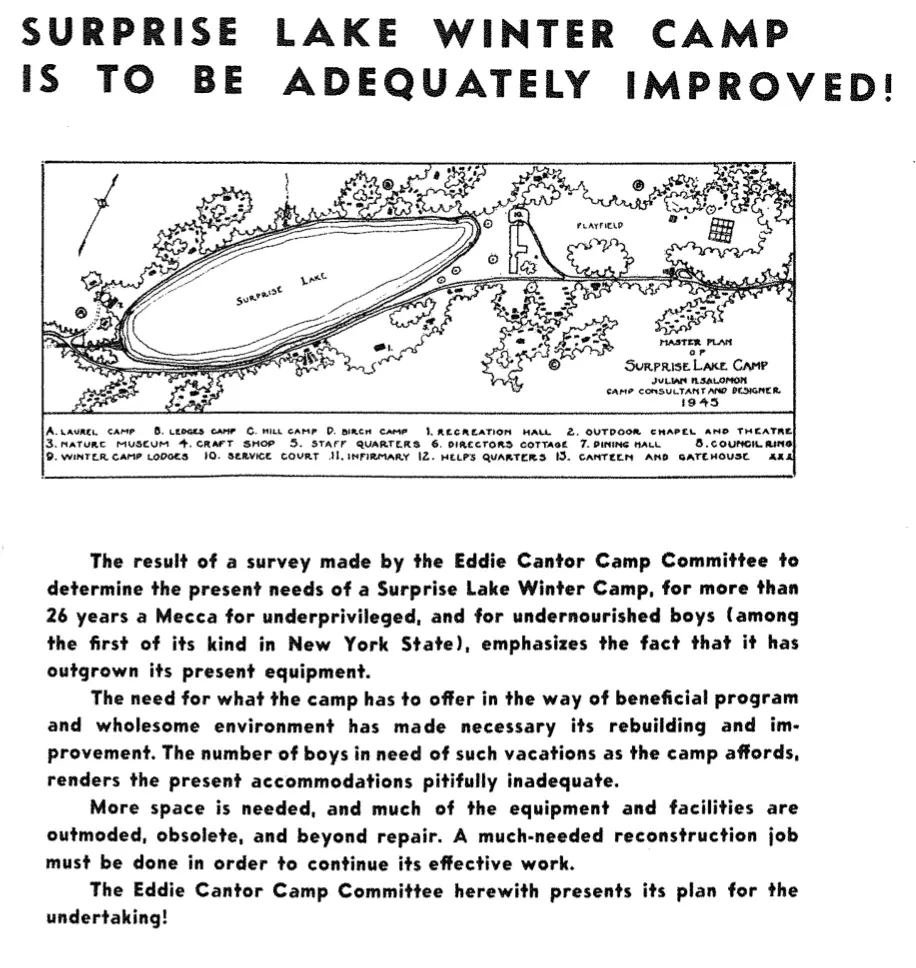
Eddie's appeal to friends on the Coast
With the help of an architect, under the direction of the late Max Oppenheimer as administrator of the camp, a spacious and commodious infirmary was built at the camp. For many years the camp infirmary was on the site of the original Bloomer home converted into an infirmary through the largesse of a Board member, Mr. Watters, who contributed $2,500. This structure is now used as the home for Asher Melzer and his family. As the camp grew larger, space was needed and through a contribution made by Abe Abramson the present infirmary building was erected and equipped at an expense of $30,000.00-funds provided by Abe Abramson. Abe was a camper at Surprise Lake Camp in 1915. In later years he became interested in the Eddie Cantor Camp Committee. Subsequently, he became a member of the Surprise Lake Camp Board. In industry he was very successful and gave generously for improvement at the camp. When he passed on, his two sisters, Gus and Belle, members of the Women's League for the Eddie Cantor Camp Committee, continued the family benefaction to the camp by erecting a group of buildings to house the camp nurses and by establishing a substantial scholarship fund in memory of their departed brother. Two years ago Gus Abramson also passed on, and Belle is continuing with family gifts to the camp.
The Watters Infirmary
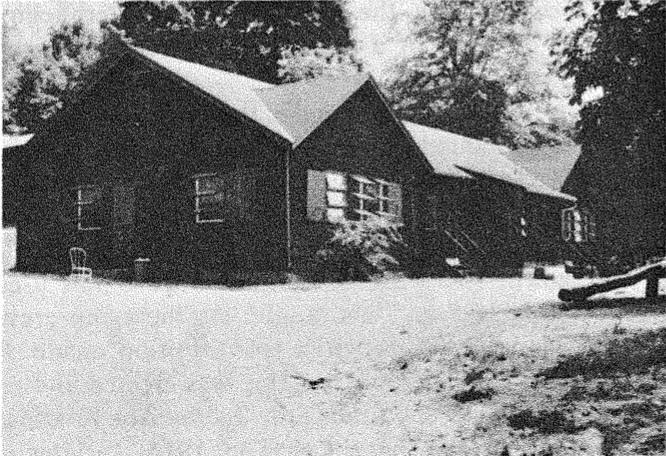
The Abramson Infirmary
The incidence of the Jacob Holman Playground at Surprise Lake Camp bears telling. In the winter of 1958 while the author was enjoying his winter holiday in Florida, he received a surprise telephone call from Dr. Ben Rubinstein, one of the Board members of Surprise Lake Camp. Ben said, "You know, Jack, a group of us here feel that you've done so much for Surprise Lake Camp, and you've done it without even thinking of any personal recognition, what we regard as a wonderful spirit on your part, and, therefore, we would like to do something for you. In fact, we have already started to raise a sum of money to create an athletic field at the camp to be known as the Jacob Holman Playground," when I remonstrated and asked why a whole playground, just third base would be sufficient. Whereupon, Ben Rubinstein continued, "No, no, third base is not sufficient. We've got to have an entire playground to honor you." And sO in the following year a playground was built at the camp, at the cost of $15,200.00 solicited and raised for that purpose. In subsequent years on the occasion of my 80th birthday, the Women's League spent an additional $3,500.00 to refurbish the playground, and at the same time put up a bronze plaque to commemorate the event.
THROUGH THE GENEROSITY OF
THE WOMEN'S LEAGUE EDDIE CANTOR CAMP COMMITTEE
THIS PLAYGROUND HAS BEEN RENOVATED
IN HONOR OF JACOB HOLMAN
1966
Just prior to this event, the Educational Alliance Alumni Association placed a plaque on the playground.
THE JACOB HOLMAN PLAYGROUND
THIS TABLET PLACED IN HONOR OF HIS
80th BIRTHDAY
BY THE EDUCATIONAL ALLIANCE ALUMNI ASSOCIATION
1965
Irving Weissberg's account of the playground dedication from the Alliance Alumni bulletin is recorded as follows:
JACK HOLMAN AWARDED CITATION
PLAYGROUND DEDICATED IN HIS HONOR
On a bright, sunny Sunday, June 21, 1959, at Surprise Lake Camp, the formal dedication of the Jacob Holman Playground was held. This marked the opening of a new playground comprising baseball field, basketball courts, and tennis courts-all to be used by the campers who are annually accommodated at Surprise Lake Camp. In a beautiful setting of mountain, forest, and lake, Jack Holman, surrounded by his family, friends, and co-workers, was honored for his long years of service to the camp. No one is more deserving of this tribute. It was a fitting prelude to his 74th birthday, which was celebrated four days later.
Dr. Gabriel R. Mason was the orator of the occasion. He spoke of Jack's lifelong interest in the camp; how Jack formed the Eddie Cantor Camp Committee to operate a winter camp for undernourished children, and with assistance from others Jack raised large sums of money for rebuilding and modernizing the camp, making it today the outstanding camp of its kind in the country.
Dr. Mason was followed by our own Ben Rubinstein, president of the Educational Alliance Alumni Association, a group which numbers among its members many who went to Surprise Lake Camp and who still have a real affection for the camp. Ben Rubinstein himself was a former camper at the camp and told how he began by working there as a bus boy. Ben spoke of the high regard in which Jack Holman is held by everyone who had come in contact with him, and he presented Jack with a plaque bearing the following citation:
On this date, June 21, 1959, this playground has been dedicated and is henceforth to be known as the Jacob Holman Playground in honor of a man who for more than fifty years of unselfish devotion, first as a counselor and social director. then as organizer of the Eddie Cantor Camp Committee, and subsequently as trustee and president of the camp, has contributed tirelessly and unstintingly to the service and benefit of all who have enjoyed the privileges and pleasures of Surprise Lake Camp.
In his response, Jack Holman stated how happy he was to have been of service through the years and made known the fact that he could not have accomplished what he did without the great help of Eddie Cantor, Emanuel Goldman, Israel Cummings, Louis Meyer, Abe Abramson, Milton Weill, the late Isidore Goldberg, and many others. Jack concluded his remarks by saying he did what he did without looking for reward and that it made him feel good to know that present and future campers at Surprise Lake Camp would enjoy the facilities provided for them by the new playground.
Many years ago, actually at about 1915, through Dr. Edwin Goldwasser who was then chairman of the Surprise Lake Camp Board, the late Felix M. Warburg contributed $5,000.00 for a baseball field at the camp, which field enlarged is now the Jacob Holman Playground.
Eddie Cantor’s Camp
Almost equal in numbers to the large crowd who made a special trip to Surprise Lake Camp on Decoration Day, 1951, to celebrate the 50th anniversary of the founding of the camp was the event which took place in September, 1955, where there was a huge turnout at the camp for the dedication of the Eddie Cantor Playhouse. Eddie made a special trip from the coast, accompanied by members of his family, to participate in the exercises. It was an inspiring sight to see Eddie Cantor on the stage of the Playhouse dedicated in his name. He told the audience of his days at the camp as an East Side boy, paid tribute to the camp for its influence on his life, and pledged to continue his interest in the years ahead.
This beautiful outdoor theatre built on the principle of the old Greek and Roman arenas boasts a spacious stage, with dressing room and theatrical lighting appliances, and has a capacity for an audience of 850. In the years following its dedication, the Playhouse has served a very useful purpose for camp dramatic productions, special events, and important formal gatherings. The camp would-be thespians have thrilled their audiences during the years with the excellent character of their performances. The talented youngsters who have participated and those who continue periodically have proved the value of this unusual addition to the camp.
Somehow a name becomes attached to an institution because of a memory, or desire to repay for benefits received in the past, and of a genuine feeling to be of help to other human beings. That fits into the personality of Eddie Cantor. George Sokolsky in his letter said that Eddie Cantor's experience at the Alliance camp in his youth made Eddie a philanthropist. He never forgot what was done for him by providing him with a vacation at camp. Eddie has since answered every call for assistance from all peoples regardless of race, creed, color, or religious denomination. His efforts on behalf of humanity earned him degrees at various universities as a humanitarian. And, Surprise Lake Camp, too, benefited from his largesse. In the forty years following the organization of the Eddie Cantor Camp Committee, $2,000,000 was raised for Surprise Lake Camp through annual theatre parties and solicitations in the name of Eddie Cantor. Always Surprise Lake Camp was regarded as the Eddie Cantor Camp, and people responded accordingly as a tribute to this great humanitarian. A few letters reprinted have demonstrated the significance of his name attached to the camp and the inspiration it engendered in the community. The teller of this tale maintained a lasting friendship with Eddie from 1903 to 1964, as is evidenced by the correspondence provided in this story. Letters say a great deal about the camp at various periods of its history. When Eddie passed on, the world mourned the loss of a great individual, friend of the underdog, an irreplaceable benefactor of the needy in all climes.
To paraphrase a quotation from Alexander Woollcott, Surprise Lake Camp will remember Eddie Cantor not so much for what he did on the stage but for what he did after the curtain went down.
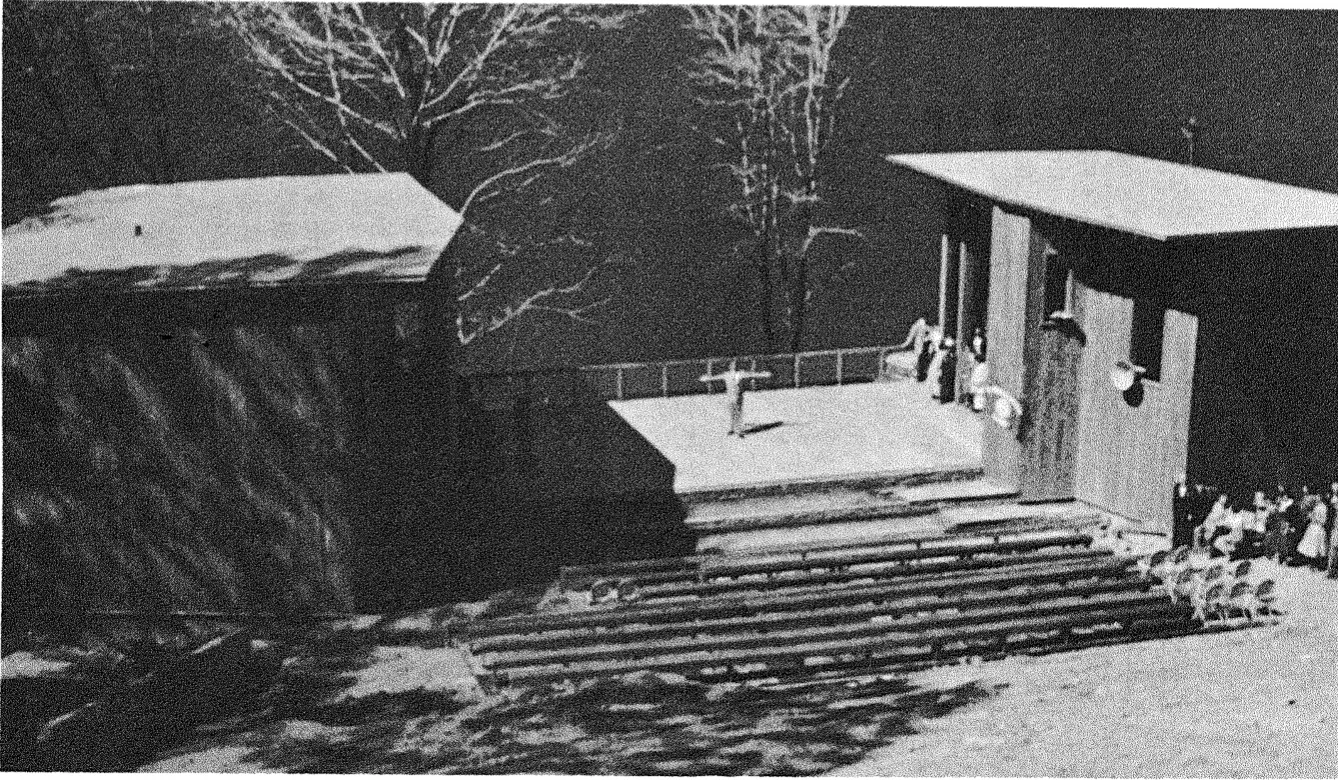
Eddie Cantor at the dedication of the Eddie Cantor Playhouse
1955
The Performances at the Eddie Cantor Playhouse
The narrator of this history has attended the annual final performance of each camp season since the construction of the Eddie Cantor Playhouse. His impressions of the shows witnessed were written up and sent to Eddie Cantor to provide evidence of the educational value of dramatic instruction given at the camp, made possible, to a degree, by the fine facilities at hand as well as by the quality of the leadership instrumental in aiding the campers. Several of these annual letters are herewith reprinted. They give a comprehensive idea of the importance of camp activity.
On August 27, 1956, a large group of spectators and visitors attended the "first night" performance and dedication of the Eddie Cantor Playhouse at Surprise Lake Camp. In a setting that only Mother Nature could provide, with the backdrop of lake, mountain, and forest, the campers and the counselors put on a most interesting and entertaining program.
Irving Weissberg described the proceedings as follows:
The star of the entire ceremony was our own Jack Holman who acted as M.C. In a moving speech he recounted the story of Surprise Lake and Eddie Cantor and of Eddie's great contribution to the camp, and to his people, and his aid in the construction of the magnificent Playhouse. He appealed to the audience of 700 persons, campers and staff, boys and girls' to emulate the great example set by Eddie Cantor to help others in their turn when they grow up and take their place in the community. He very modestly omitted any reference to his own great part in the reconstruction of the Playhouse.
After the show, the following letter was sent by the author to Eddie Cantor.
Dear Eddie:
Last night I sent you a telegram as follows:
"I cannot go to bed tonight without sharing with you the joy of a soul-stirring experience I had at Surprise Lake Camp this evening at the dedication of the Eddie Cantor Playhouse. A hundred children, all campers, performed. I got the thrill of my life. Letter follows.
Considerable progress was made this summer in completing the Playhouse at camp. At the present moment it is practically all done excepting a few finishing touches. So, at the last moment it was decided to assemble the entire camp in order to give an official dedication to the theatre. Naturally I could not miss it and Daisy and I made the trip from here to Surprise Lake Camp and so did Mr. and Mrs. Irving Weissberg from Mahopac, New York. As things turned out, I would not have missed it for anything in the world.
The camp had an elaborate program in which over 100 children, boys and girls, participated. To begin with, they had an opening ceremony with Indian folklore which included the lighting of the fire, smoking of the pipe of peace by all the Indian tribes, then winding up with an Indian dance. After this followed the history of your life from the date of your birth, January 31, 1892, to the present day. All of the highlights of your past were touched on. One little fellow sang "Suzie" with all the motions and trimmings, excepting the black face. Another youngster gave "Whoopee" and rolled his eyes in real Cantor fashion. A third boy sang "Ida" in a manner that even Ida would not have known that anybody other than you were singing it. Then a chorus gave us 'Put Your Arms around Me" and, of course, reference had to be made to the "Singing Waiter" in which one of the boys impersonated Jimmy Durante and, to cap the climax, a fitting tribute was made to your humanitarian work for all creeds and denominations.
The program included a square dance for the 16-year-old boys and girls in which one of the counselors did the 'hora" and the music was accompanied by the audience singing. A male chorus sang 'The March of the Israeli Army" and a female chorus gave a rendition of "By the Sea.' The program was climaxed by "When Moses Hit the Rock, in Hebrew, in which the entire camp joined in the chorus. The program wound up with a number of Israeli folk dances given by the girls' camp.
In all it was a program long to be remembered. The setting was most beautiful. The stage was a riot of color and light, with the lake and hills on the other side in the background. The audience of over 600 dressed in a variety of color added beauty to the scene.
My telegram tells you how felt about this memorable function. Throughout the performance my cup of happiness was filled to overflowing. I restrained tears from running down my cheeks and throughout I thought of the joy this scene would have given you were you present.
I cannot help feel the happiness you spread into the lives of thousands of young children who are able to attend our most beautiful camp because of a lifetime of interest you have had in a place that inspired you when you were a youngster.
A very fine job was done by all of the personnel associated with the camp from the administrator, Asher Melzer, down to the dramatic and other specialty counselors.
All of the above impelled me to wire you as soon as I left Surprise Lake Camp. My heartfelt wishes are for your continued good health and a prayer that you may ever lend your might for the benefit of others.
I am with deep felt affection.
Cordially,
Jack Holman
Dear Eddie:
Last night I visited Surprise Lake Camp for the final All-Camp program of the 1960 season. As usual I was treated to a brilliant spectacle at the Eddie Cantor Playhouse. The entire camp was present comprising an audience of 750. The scene was enchanting, in the dark, on the lake front, with the Playhouse lights creating a picturesque atmosphere comparable to any theatrical display.
Six decades or sixty years of camping was the theme of the evening's program. Everyone present, while waiting for the proceedings to begin, heard your voice on the turntable records which included practically all of your famous songs. Then Asher Melzer read your very touching letter, and the show was on.
The songs and dances fitted into the various periods, telling the story of the passing of time, in a sentimental and touching manner. You actually saw the children of parents who came from foreign lands, over half a century ago. A familiar picture of yesteryear was a group of boys laden with knap sacks, hiking their way to camp from the Storm King railroad station over the Breakneck Ridge.
To illustrate one of the early camp groups, a band of boys sat around an imaginary council fire and sang "Yes, Sir, That's My Baby" while one of the boys with accompanying motions imitated the Eddie Cantor of the day.
By 1914 Surprise Lake Camp was singing, "Give My Regards to Broadway," George M. Cohen style. Then the entire camp audience raised their voices in "Over There," singing and swaying to the music. I actually felt I was a camper again. The Charleston craze was not forgotten and the boys and girls gave a near professional demonstration.
A sad reference was made to the 1929 financial panic, in music to the tune of "Brother Can You Spare a Dime. Relief came when we heard the voice of Franklin D. Roosevelt admonishing the nation "that the only thing we have to fear is fear itself.”
India, lore was presented by a tribe of 50 boys, under lights, who were met by a torch parade of another tribe of 50 boys. To the beating of the tom-tom we witnessed a tomahawk dance. Where else on any camp stage can 100 boys perform, other than at the Eddie Cantor Playhouse.
With memories and friendships forever, there rang out in the night air, "Surprise Lake Camp How I Love You" and the curtain went down on an extraordinary fine and successful camp season.
This is the third time, this summer, that I visited Surprise Lake Camp. Each time I made a special call at the Marjorie Cantor Memorial Clinic. All in all, 1700 service items were administered during the 1960 camp season. If the Marjorie Cantor Memorial Clinic were not in existence most of these calls would have to made at the regular infirmary over a half mile from the girls' camp, which would entail bus or automobile transportation. It appears that in the first year of its operation, the Marjorie Cantor Clinic proved a serviceable asset to the girls' camp population.
This is the first opportunity that I have had to acknowledge your telegram and to express my gratitude and appreciation for the wonderful message which you sent me on the occasion of the celebration of my 75th birthday. -hope that someday I may be able to compose a sentiment equal to looking forward, with faith and hope, that I yours and I am may achieve that goal in time to send you a fitting telegram on your 75th birthday. It is my fervent prayer that you continue to remain in good health.
With warmest greetings to you and Ida, I am
Affectionately,
Jack Holman
This letter prompted Eddie Cantor to respond to the author with congratulations on the author's 75th birthday.
Dear Jack:
This occasion of your 75th birthday I cannot let go without a word from me. Where you are concerned words truly are inadequate. Through all the years you have been a strong shoulder to lean upon. Your wisdom, your judgment have made people all around you depend on you. Were it not for your kindly advice and your persuasive ways there could never have been an Eddie Cantor Committee. This I need not tell you has been the one truly great warm episode in my life. You have enriched us all with your friendship. May the great stage manager who is responsible for our earthly show and its casting keep you with us center stage for a long time. I embrace you most affectionately.
Eddie Cantor
The 1962 letter to Eddie Cantor was the last one written to him, for early in 1964 he was called to the great beyond.
Last night, I went to Surprise Lake Camp to witness the closing performance at the Eddie Cantor Playhouse. As usual, it was stupendous, glamorous, colorful, and inspiring. An audience of 800:600 campers, 150 staff, and some 50 visitors including abe Abramson, his sister, Irving Weissberg, Dr. Morris Meister, president of one of the city colleges, witnessed a display of talent that had to be seen to be believed. This year the program had no particular theme, simply a review of the highlights of the 1962 season, various selections repeated as done by camp groups during their 3-week stay at camp.
I was given the honor of opening the proceedings with a few remarks. On this occasion I welcomed the assemblage and performers, some 300 of them, and announced that this evening's ceremonies would be dedicated to the memory of the late Ida Cantor. The tribute was understood and accepted in silence by the audience. The show had to go on and it did.
The program was opened by Division I, with Indian dances by the 8, and 9-year-old boys, about 80 of them. Marching to the beating of the tribal drum they crowded the Playhouse stage. There were songs by the "braves" and dances depicting "The Medicine Man, "Rain in the Distant Future" and demonstrations of Indian skill and precision. Division II presented a sports clinic in pantomime. With a look into the future all the games were realistically played to music, such games as basketball, baseball, volleyball, gymnastics, including tumbling, handsprings, somersaults, and pyramids. The feature was physical fitness stunts.
The junior girls took the stage with a collection of foreign songs and dances. Arrayed in costume pertaining to the country represented the girls in succession gave Brazil in Portugese, Turkey in Turkish mixed with English, French children in the Tuileries, Polish countryside scenes with chicks hatching from shells a Japanese exotic story of a shining bamboo stalk, ending in the "Shining Beauty Festival" of the full moon, then a picturesque and realistic Russian dance in which 60 boys and girls participated.
A banjo group gave a medley of American songs, featuring Irving Berlin's "America' in which the audience joined. The older boys and girls contributed jazz, strictly American, a sort of "West Side Story" effect, all in pantomime by sweater girls and cigarette-smoking males.
Intermission with the traditional feast of ice cream donated a by Eddie Cantor was a howling success. After the intermission a record narration of "Ballad for Americans" thrilled the audience. All countries and nationalities, accompanied by historical songs, were depicted dating back to the Revolutionary War, the signing of the Declaration of Independence, the freeing of the slaves, our progress in all occupations and branches of industry. The wind-up numbers included a gleaming and a musical promenade in an art museum, the visitors in gala costumes. The choreography of "Nestling 'Neath the Shady Trees" and the blowing of "Taps" rang down the curtain on a glorious and happy camp season.
It should be noted here that as part of the fiftieth-year celebration of Surprise Lake Camp, the Women’s League for the Eddie Cantor Committee tendered its annual •anniversary dance to the narrator of the camp history. In an elaborate journal prepared for this event, there appeared a reprint of an article written by the history author for the Surprise Lake Camp Echoes in 1918, which outlines the camp's activities of that particular era. A copy of that letter at this time clarifies the impression of the camp at that time in the public eye.
(1918 Letter) SURPRISE LAKE CAMP
How time flies! Here it's almost summer again. Soon we'll be thinking about our vacation, and our thoughts will naturally light upon Surprise Lake Camp. Why not? We've had fine times there in years gone by, and we hope to have many more of them.
What a relief our camp affords. We live in the most crowded section of our great city, in populous tenements, streets congested, surrounded by stores and factories, charged with a hum and a buzz of our daily routine. Winter and summer, fall and spring, one day is like another; hustle and bustle, a constant din, a seething throbbing existence, this is our daily life. We must have a change, we must do something else, we must get away from the grind, if only for a temporary period, so that we may return refreshed and strengthened in body and mind. Thanks to the Educational Alliance and to the Young Men's Hebrew Association our need is provided for. Jointly these two institutions conduct Surprise Lake Camp, one of Nature's most beautiful playgrounds located in the hills behind Cold Spring-on-theHudson, about fifty miles from New York City. It is there we go every summer, year in and year out, for there it is that Nature abounds in all its splendor, and beckons us, and we cannot resist.
What a contrast camp life is to our accustomed daily life! We sleep in tents close to Mother Earth, on the shore of a beautiful silvery lake. We gambol in the open on spaciously equipped playgrounds underneath an azure sky. We bathe in the cool waters of Surprise Lake and glide over its surface with sturdy oar-strokes. We climb hills and traverse roads and hike to places of interest. We learn about trees and birds and dwell in harmony with all that Nature created. We breathe pure air, we absorb the sunshine, we electrify our muscles and limbs, we acquire vitality and vigor. Camp has in store for us a wealth of health, and we are quick to realize and take advantage of it.
How we await the day! The vacation cannot come too quickly. We are impatient to embark for our summer haunt, this year more than ever. It is a duty to ourselves and to our country. A nation in arms depends upon its youth. We are Americans and as such we will not be found wanting. Inspired by patriotism for our country we will prove ourselves to be true, loyal citizens. We have answered every call made on us. We have conserved food and fuel, we have purchased Liberty Bonds, we have invested in Thrift Stamps, and now we will prepare for the greatest sacrifice. If the occasion arises we will be ready to offer ourselves, our thoughts, our lives, our all. Our country can best be served by stalwart, sturdy men. He serves who is best prepared. As the chase belongs to the fleet, so survival is for the fittest. There is much to be endured, mentally and physically, and he who is sound in body and mind has the advantage on his side. This is a time for big souls and strong bodies, and it behooves every one of us to build well.
Surprise Lake Camp will help us and we in turn will help our country. We'll wax enthusiastic in our games. We will play baseball, basketball, handball, and volleyball. We'll swim and row and hike and cheer and sing. It will be a source of gratification and pride to feel that our personal happiness is to be our country's glorification.
Unable to attend the Plaza function on October 28, 1951, Eddie Cantor sent a record which reproduced on the turntable gave the assemblage his message.
Good evening:
This is Eddie Cantor . .. and here I am again, talking to you through this record, only because I have to be in Hollywood tonight for my television show.
Tonight's dinner at the Plaza has a threefold purpose. One, you lovely ladies of the Women's Auxiliary of the Eddie Cantor Camp Committee are having your annual affair at which time you raise so much money. Two, you are honoring one of the nicest men I've ever known, Jack Holman. He has done more for Surprise Lake Camp than anyone, including this guy Cantor. He has actually made it his life's work. He has seen to it that underprivileged boys are taken care of such as we were when we were kids at Surprise Lake Camp.
Also, and very important, it is the fiftieth anniversary of this camp which means SO much to all of us. You know it's . . . almost unbelievable to think that I spent the happiest days of my life at this camp more than forty-six years ago. Forty-six years! It's a long time to be around. It's a lifetime. I'm sure that those of you who have contributed both your money and your effort to keeping alive this camp will get a great kick out of knowing that young boys and girls are getting a nice start in life at Cold Springs, New York.
Cold Springs can be a paradise to people who have never seen grass or trees before. I know. I myself looked upon it as heaven on earth.
For all you have done, for all you are doing, for all you will do, my blessings.
And here's a great big kiss to all of you from
Eddie Cantor
In the journal of the Women's League of the Eddie Cantor Camp Committee, on the occasion of the 50th anniversary dinner, at the Plaza Hotel, on Sunday, October 28, 1951, the author wrote the following:
Dear Friends:
Surprise Lake Camp, Oh, How I Love you. This refrain from the hearts and throats of hordes of youngsters has echoed and reechoed in our hills and mountains for fifty years. Every summer for the past half century, literally thousands of boys from the East Side-West Side of our city have been afforded an opportunity to spend a two-week vacation at Surprise Lake Camp to play, to swim, and to hike in the great open spaces.
With the advent of the organization of the Eddie Cantor Camp Committee in 1923, sponsored by Eddie Cantor himself, structural changes were made to accommodate the campers. Specifically, canvas tents gave way to substantial wooden tentalows, and numerous other appropriate facilities were added. In recent years the outmoded tentalows were removed and in their place modern cabins were built, based on a decentralized formula. This reconstruction is now almost completed. We are confident that the ultimate consummation of this project will make Surprise Lake Camp the camp of the future.
A natural complement to the Eddie Cantor Camp Committee was the organization of the Women's League. This came about six years ago. In a comparatively short time a group of alert active young women have made a wonderful contribution to the structural development of the camp, the most important of which is the establishment of a sister camp known as the Surprise Lake Camp for Girls. For the past three summers necessary vacations were provided for both boys and girls.
All of the accomplishments listed above were the result of intense interest, hard work, and social vision of the officers and members of the Eddie Cantor Camp Committee and of the Women's League. And, it is only fair to admit that by far the lion's share of the credit and glory for the magnificent achievement to date is due to the myriad of friends and supporters, many of whom are present tonight, who have consistently helped in this worthwhile community enterprise.
To all of you I herewith express my appreciation, and I hope that you may always have the inclination and the sinews to carry on.
Jacob Holman
In his book Take My Life published in 1957, Eddie Cantor wrote about Surprise Lake Camp. Grandma got me to a place where I learned more than I ever learned in school-Surprise Lake Camp, a camp for poor undernourished kids who'd never seen a blade or a tree. They scooped us up off the parched summer streets of New York and sent us to heaven, a beautiful spot opposite West Point, where the air smelled sweet, where there were growing things and three square meals a day, Here I was for the first time. I was crazy about it. I became a camp clown in the hope that I'd be held over for more than the two weeks! It worked. They'd keep me six or seven weeks each summer. I'd play jokes, sing, anything to keep staying.
On January 25, 1946, Eddie Cantor wrote to a friend: More than 40 years ago, through the kindness of the Educational Alliance on the East Side of New York, I was sent to Surprise Lake Camp. To a kid who was brought up on the sidewalks of New York, you imagine what the vacation meant. For several seasons, Surprise Lake Camp was a paradise I looked forward to. When I look back upon it, they were the happiest days of my life. I can see myself now at a camp fire reciting "The Soul of the Violin' or singing "My Mariutche She Take-A -A Steamboat. No Broadway audience was half as appreciative.
Some of that audience and myself vowed that when we grew up and could afford it, we'd send other kids to the camp. Well, Sir, we've done it a for a good many years now. Surprise Lake Camp has grown and it has helped boys from the "East Side, West Side, All Around the Town.”
A pilgrimage can be part of history. That's exactly what happened to Surprise Lake Camp. After careful planning, on Decoration Day, May 30, 1951, several hundred people, men and women, made a trip to Surprise Lake Camp to celebrate the Golden Jubilee of the camp. And, it was done in unique style. The slogan of the event was "Let's Be Kids Again." In order to comply, the large assemblage went to the camp by train, exactly as the campers did fifty years ago. When we got off the train at Cold Spring, we were transported by automobile instead of walking up Breakneck Ridge. At the camp on that memorable Jubilee, we engaged in sports, went rowing and swimming in the lake, and indulged ourselves a sumptuous picnic meal in the dining room.
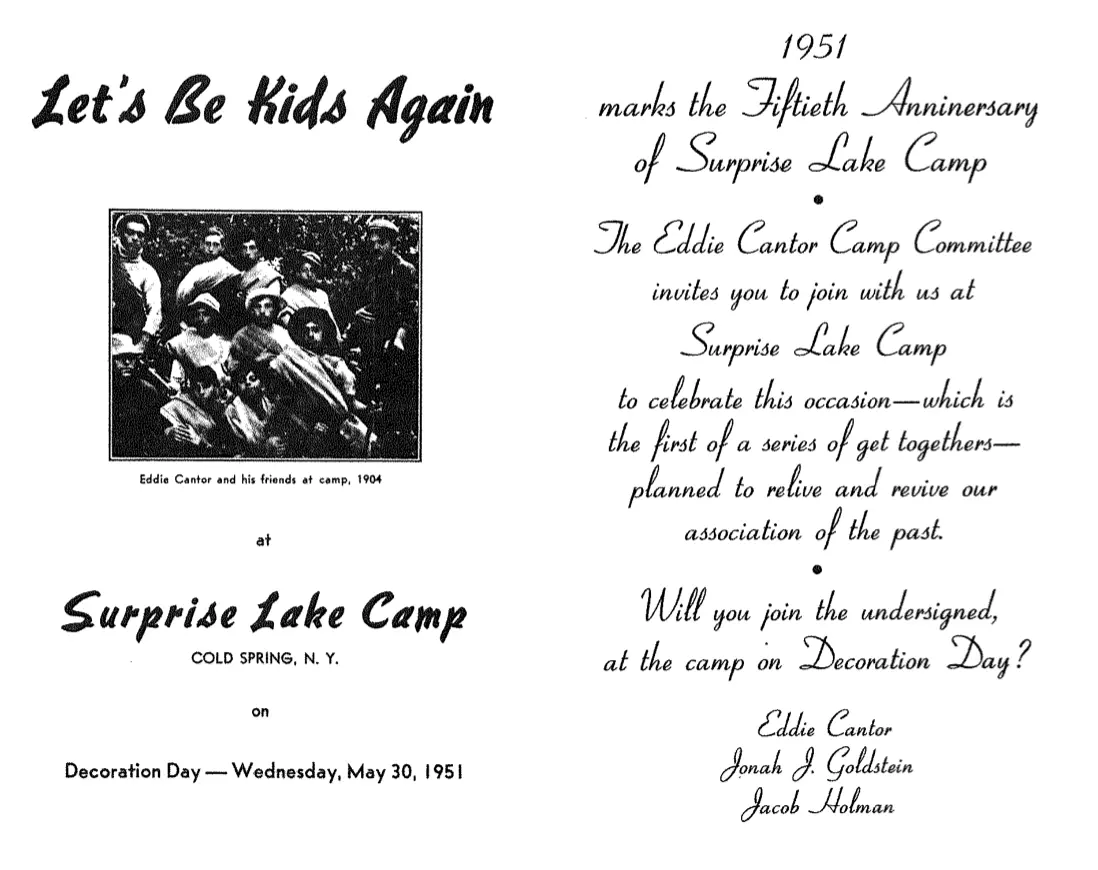
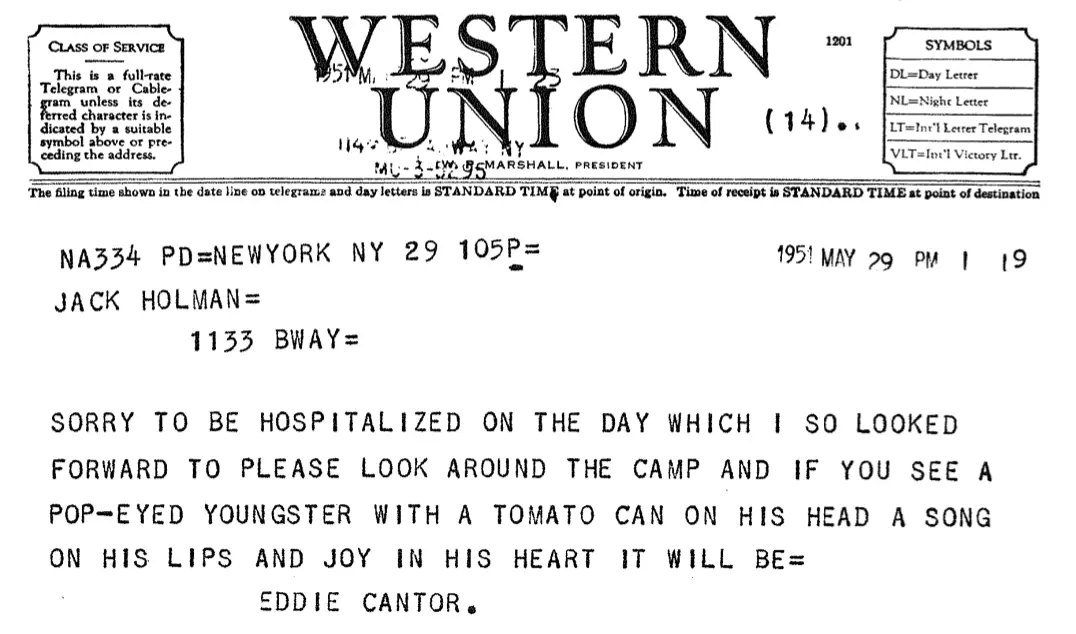
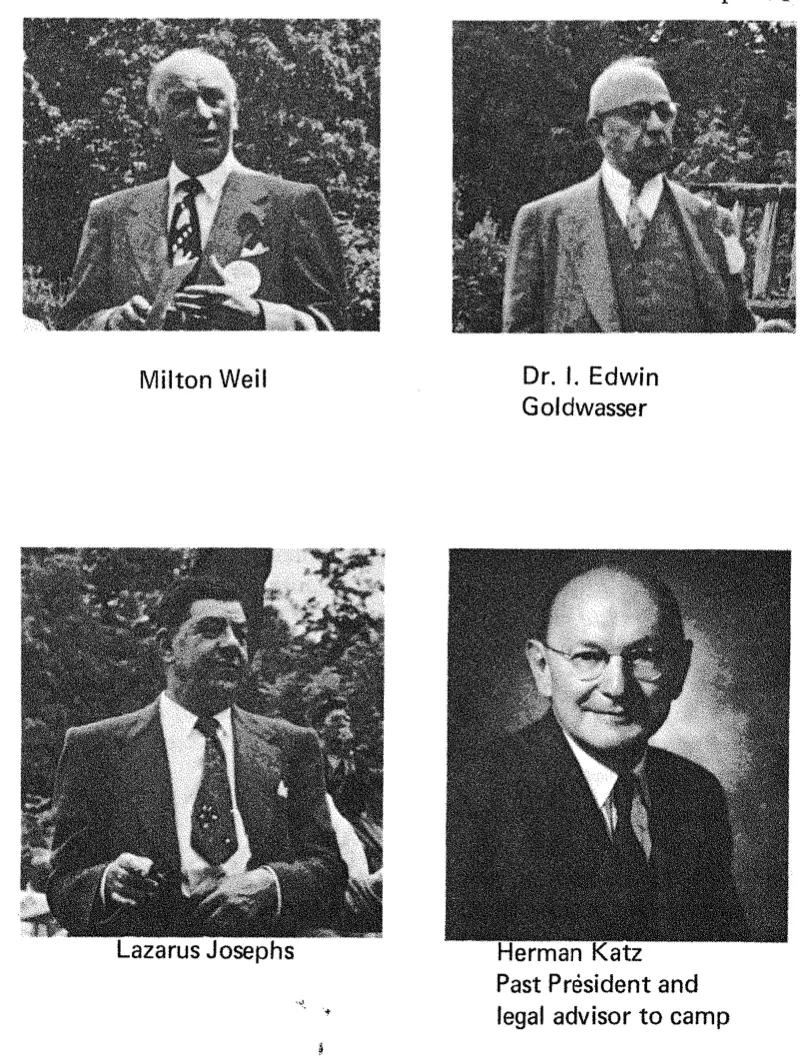
At the 50th Anniversary Reunion
Participating in the celebration were members of the Surprise Lake Camp Board, the Eddie Cantor Camp Committee, the Women's League for the Eddie Cantor Camp Committee, the Educational Alliance Alumni, and the Old Timers of the Y.M.H.A. It was a glorious event stimulated by nostalgic memories, long to be remembered. To add luster to the program of the day, the Women's League presented the camp with a check of $10,000 and the widow of a former pupil-Shaw by name-sent in five shares of A.T. & T. stock which has since more than doubled in the number of shares, the dividends of which are used annually for camp scholarships.
Prior to the celebration at camp there were radio broadcasts on a national hookup in which Jack Holman, Nat Holman, and Eddie Cantor participated. Here we record Jack, and Nat's remarks on May 5. 1951.
Jack Holman
Gratitude is the core of human relations all over the world. When expressed so that young people benefit, that sentiment transcends all others.
Almost fifty years ago a little boy, emaciated, with just enough clothes to cover his body, was sent to Surprise Lake Camp at Cold Spring, New York, by the Educational Alliance, located on East Broadway corner of Jefferson Street. This little boy, an orphan, lived with his grandmother in cramped quarters in a tenement on the Lower East Side. A two-week vacation at camp, under the open sky, with green fields and a lake, was a treat that fired the imagination of this youngster. At the camp he learned to laugh and sing and even to entertain at camp fires where other campers comprised the audience. This in fact was the beginning of a career.
By virtue of his native talent and a dogged will to eat and to live this boy made steady progress in the entertainment profession. Soon after his attainment of stardom he determined to carry out a resolution of his early boyhood. Surprise Lake Camp helped to give him an opportunity in life. Now that he had arrived he would do what he could to lend a helping hand to others who are deserving. Thus, this boy, now a young man of stature, launched himself on a new career which today stamps him as the greatest humanitarian of the age.
The man is Eddie Cantor, chief sponsor of the camp and its honorary president.
Nat Holman
I am one of the Old Timers of Surprise Lake Camp. As a natural consequence the camp has always been a pleasant memory. My first experience there was as a camper. Then I became one of the counselors. In the latter capacity my assignments had to do with the recreational activities, mainly baseball and basketball.
The camp's athletic facilities of that day were ultra-modern, and for the boys who came from the tenements of the East Side of New York City, the play fields were a marked contrast to the crowded streets of the big city. A real baseball diamond and a regulation basketball court afforded the little fellows who vacationed at Surprise Lake Camp a haven for fun in the outdoors.
Then, as now, the counselor was the object of hero worship. Emulation of proper personnel is a short cut to habit formation. Fortunately, Surprise Lake Camp provided a wonderful laboratory for social service which benefited both campers and their leaders. There was a carryover, too, in the year-round life of all concerned.
My experience at Surprise Lake Camp, and the opportunity it presented for doing things, the things all boys and young men like to do, had a direct influence on my lifetime interest in camping for children and in sports for all people. The educational and character training aspects of camping have been close to my heart. By the development of body and mind, the youth through proper coordination emerges the man.
In gratitude I humbly acknowledge that my early years at Surprise Lake Camp were an important factor in whatever little success I have achieved in the world of education and sport. All honor and glory to the men and women who are responsible for the past half century. May they have the strength and the will to carry on for the next half century.
The All Year-Round Program
The winter camp of former years was a combination of education and health building. Boys suffering from malnutrition received a regular school education while building up their physique. Where conditions and circumstances made it necessary to discontinue this type of operation a new format for winter camping was established. At the same time the camp facilities were put to good use. Now, for the past twenty years, we have a winter camp program in which adolescent youngsters are accommodated weekends from September through June each year in our main building, and other special structures, properly winterized. These winter campers are solicited and organized from settlement houses and educational institutions. The weekly attendance varies from 40 or 50 to 100, which number is largest during a December and April school holiday period. Campers in these groups are properly supervised; we provide the sleeping quarters, and bedding, and they bring their own food. A nominal charge of $2.00 per-day-per-person helps to defray custodial, laundry, and clean-up expenses. In recent years we have been providing, at request, packaged frozen food at cost. This type of camping has grown in popularity. Annually, almost 3,000 campers are accommodated, and the financial aspect is under control, both ends being usually met, with an occasional minimal deficit.
Mr. Surprise Lake Camp
At the meeting of June 17, 1970, after adjournment, Marjorie Wyler, chairman of the Board, held me back from making my departure. Much to my surprise the Board engaged in a celebration ceremony of my 85th birthday. Beverages, a snack, speeches followed. I was completely overwhelmed. The surprise party affected me emotionally so that I was unable to respond properly at the time. Subsequently, my thanks and gratitude were duly made to the Board for its thoughtful consideration. The tribute paid to me on this occasion was accompanied by a gift plus pledges amounting to $3000.00 to be used for camp scholarships.
The speeches referred to were all highly complimentary. A few members of the Board unable to attend the meeting sent letters which were equally complimentary. The letters follow:
June 15th
Since, as I told you, I will be out of town on the 16th and will be unable to attend the Surprise Lake Camp Board meeting, I particularly wanted to send you a thought about Jack Holman on this auspicious day in his young life.
As you know, I have known and respected Jack since my boyhood when as a camper, counselor, and group leader at Scatico for some 15 years, he was very much a part of our camp life. t remember him, Daisy, and the whole family fondly beSo cause their lives and my own were intertwined in that happy, carefree period. I have watched him age very graciously with no diminution of his energy, mental acuity, or outgoing qualities. He is indeed a remarkable person who is deserving of the very best life has to offer and many more happy, productive years.
Please extend these wishes to him on my behalf and express my sincere regret that business prevents my delivery of these sentiments personally.
Best wishes,
Len Nadel
A Toast to Jack Holman
by Irving Weissberg
It is fitting and proper that on the occasion of his 85th birthday the Board of Directors of Surprise Lake Camp should dedicate this meeting in his honor.
In the words of Daniel Webster, which I learned as a school boy with Jack as my teacher, 'he has come down to us from a former generation. Heaven has bounteously granted him many years beyond the biblical threescore and ten, for which we are eternally grateful. He has become a legend in his own lifetime, a life devoted to Surprise Lake Camp.
He was Eddie Cantor's mentor but there were many others also on whom his benign influence benefited the camp.
He was for many years the chairman of our Board. As our own elder statesman, we are guided by his sage advice to this very day.
With his verve and keen mind he belies his years and is the envy of much younger men. He is 85 years old and still retains his youthful enthusiasm and faith in the future.
May God grant him many more years of youth.
To Jack Holman
Student, Teacher, Brother, Mentor,
From the Educational Alliance, a community center,
You came to us and held up the lamp
Of our beloved Surprise Lake Camp.
For camp you always did try to strive,
Even today at eighty-five.
While threescores and ten is the biblical count,
We thank God you exceeded that amount.
We have all learned to revere and love you,
There is no one in our hearts who stands above you.
Leading us, advising, raising money,
In weather foul or weather sunny.
Always on hand with a cheery greeting,
Very seldom did you miss a meeting.
You were responsible for Eddie Cantor,
And we enjoyed his fun and banter.
With your keen mind you belie your years,
You are the envy of much younger peers.
And now we pray, to tell the truth,
That God may grant you more years of youth.
Today, your birthday, we forget our concerns
In wishing you many happy returns. -Irving Weissberg
Dear Jack:
I'm sorry that I will not be with you on June 17th when the Surprise Lake Camp is giving you a surprise birthday party on your important milestone. It's good to know that you have reached another "new high" in birthday anniversaries. Wall Street should follow your example.
So many memories come to mind as I realize the many years of close association we have had together in behalf of Surprise Lake Camp. I recall the first time we met-I as a camper from the uptown Y.M.H.A. -you as the top banana from the downtown Educational Alliance. You were a "pro" from the very start.
You hit your real stride when you, along with Manny Goldman, got Eddie Cantor interested and formed the Eddie Cantor Camp Committee. It is safe to say that few communal organizations can boast of as successful an alumni group as can Surprise Lake Camp. When the chips were down and the going got rough you were always for carrying on the program-never allowing the campers to suffer but always putting the need ahead of the funds at hand.
You have built a great monument-you have every right to feel proud. You are getting some reward in the praises being accorded you while you are still around to enjoy them you and your large ever-expanding family.
Tess and I salute you and say carry on until you reach that biblical "hundred und twansig”.
Affectionately,
Milton Weill
In A Dreamer Journey Professor Morris Raphael Cohen of the City College of New York, expresses this innermost spirit which holds humans fast.
Brief is the life of man and of short duration is his handiwork. But the echoes from soul to soul go on as long as human life lasts. That seems to be the spirit which binds together the dedicated members of the Surprise Lake Camp Board.
Before concluding this history of seventy years, a word of caution is offered. If it is true that one of the symptoms of old age is a loss of memory there may be names omitted that should have been included. No apology for this lapse is made, but forgiveness is asked.
While in the first chapter it is stated that the history of Surprise Lake Camp is based on oral testimony, in a large measure from the author, nevertheless acknowledgment is made of assistance rendered by several persons interested in the welfare of the camp. Irving Weissberg made a visit to the Putnam County Hall of Records to obtain a copy of the original deed of purchase of the camp site. He also supplied many copies of the Educational Alliance Alumni Association Newsletters which contained records of specific information concerning the operation and progress of the camp. Marjorie Wyler agreed to read the manuscript in its original form and proposed valuable suggestions. Asher Melzer supervised the typing and retyping of the manuscript, did some personal editing and helped immeasurably in the compilation of the photographs and the organization of the material before and after the manuscript went to press.
I am indebted to my sons-in-law, Murray Greiman, Irwin Fleischner, and Bernard Sunshine for their constant encouragement and persuasion while was engaged in the writing of the history. They insisted that the history must be written because it would portray a significant phase of community service.
Transcribed and digitized by Daniel Meskin